Evgeniya Porechenskaya // Shutterstock
Popular fashion trends the year you were born
If y'all were born in 1918, congratulations. According to the Pew Research Center, y'all're one of about only 72,000 centenarians in the U.s.a. and fewer than 500,000 worldwide. If yous've lived that long, yous've seen some large changes in fashion along the way. Some take come, gone, and come back over again. Others were regrettable fads that thankfully stayed dead in one case they went out of vogue. Others caught on quickly and never went out of style.
Some fashion trends are the result of war, others are the brainchildren of assuming, innovative designers. Some are born out of necessity, some are triggered by a unmarried celebrity's taste, and others arrive by accident. No matter the reason, mode both steers and reflects the climate and culture of the time. Here are 100 of the virtually memorable trends over the past century.
RELATED: Popular fads from the yr you were born
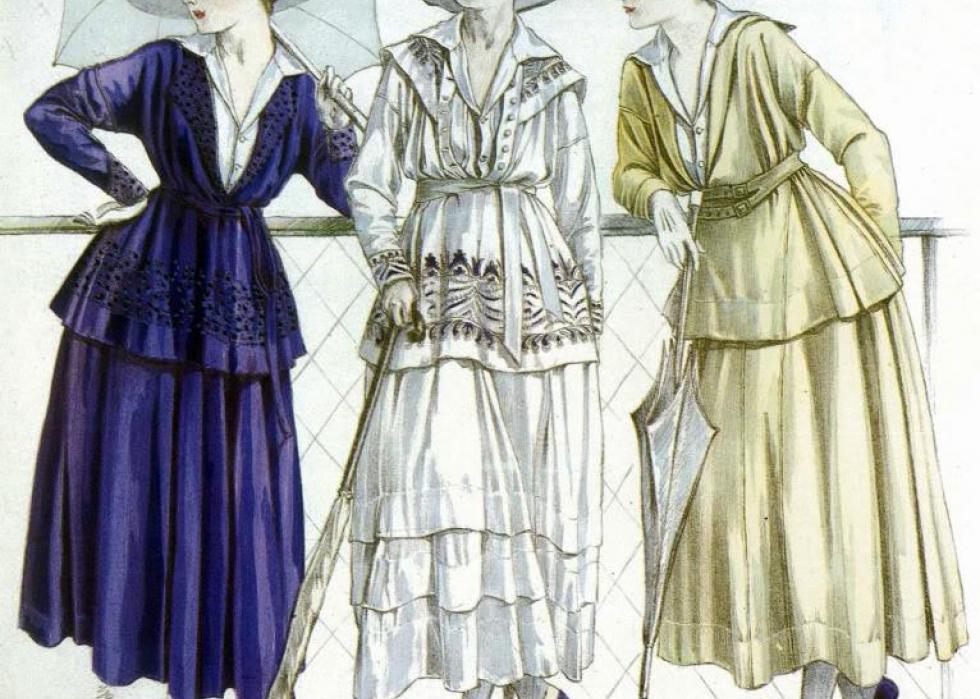
Les Elegances parisiennes Public Domain // Wikimedia Eatables
1918: Parasols
In the 1920s, tanned skin came into faddy and past 1930, minor, delicate, and decorative sun umbrellas were all but a retention. In 1918, yet, parasols were nonetheless a common sight equally women sported the accessory both for its role and its form. Parasols, after all, had long been a symbol of high society.
Public Domain // Wikimedia Eatables
1919: Trench coats
Long outerwear made from rubberized cotton had been effectually since the 1820s, but what is at present chosen a trench coat exploded in popularity after returning soldiers brought them back from World War I. Long, heavy, warm, and durable, they protected soldiers in the trenches not just from drenching rains, but also from the poisonous substance gas that has come to epitomize the conflict—the trademark wide neckband was designed to tuck a gas mask into to brand it airtight. Upon returning to civilian life, many soldiers only kept the rain jackets they were issued on the forepart.
Auckland Museum // Wikimedia Commons
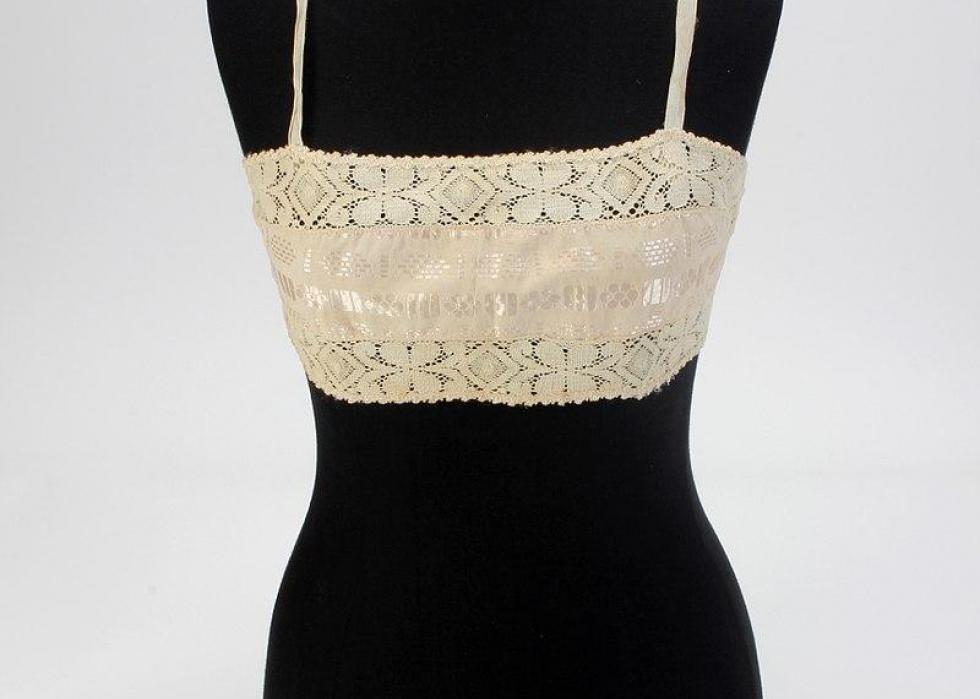
1920: Bandeau tops
By the 1920s, women had generally abandoned the bust-enhancing corsets and girdles of generations by. The era of the flappers was underway, and boyish bob cuts with adolescent bodies were the hot new look. Women in vogue were now sporting tight bandeau tops that intentionally flattened their breasts.
George Grantham BainLibrary of Congress // Wikimedia Eatables
1921: Cloche hats
Hats were a part—if non the nearly important part—of the standard uniform for men and women during the Roaring '20s, and few hats were more than popular in 1921 than the all-encompassing cloche hat. Snug and worn low over the eyebrows, cloche hats perfectly complemented the short bob cuts that flapper women fabricated famous.
NASA // Wikimedia Eatables
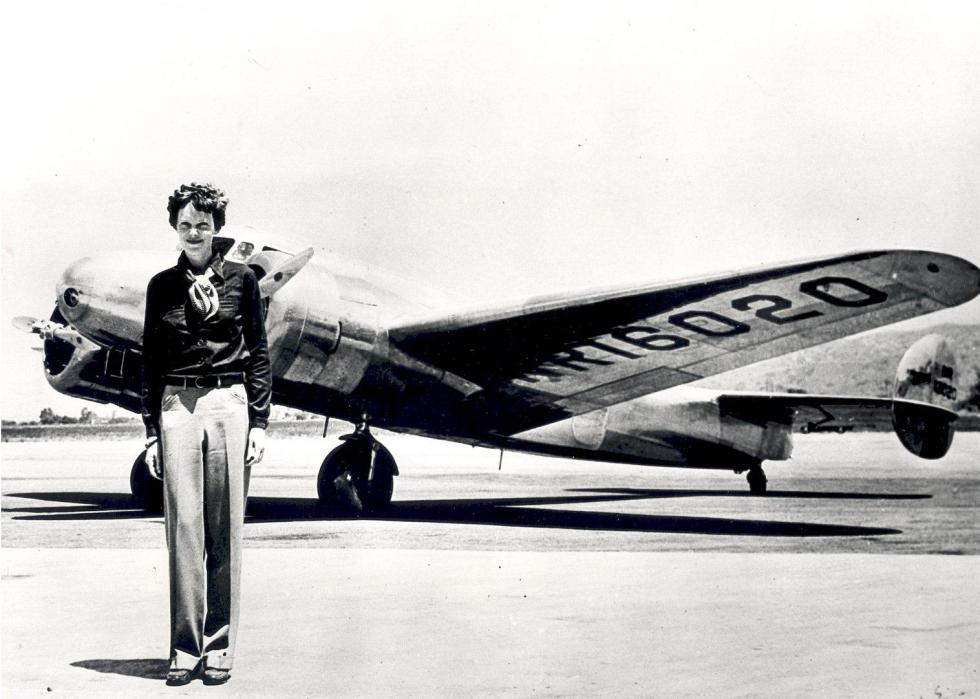
1922: Trousers for women
Few people impacted 20th-century fashion more thoroughly than Coco Chanel, and although women briefly sported trousers while working in manufacture while the men were abroad during Globe War I, it was Chanel who made pants a female fashion argument. Chanel reportedly loved the look and experience of trousers, wore them often and publicly, and by the early on 1920s, she started designing them for women.
Swallowtail Garden Seeds // flickr
1923: Art deco dress
The fine art deco movement that swept Europe and the Usa in the 1910s was in full event by 1923, and the fashion impacted clothing as much as architecture. That year, women's wear was trending toward geometric shapes and patterns, oft with seaming intentionally left visible to add detail, along with surface designs and graphic embellishment.
Auckland Museum // Wikimedia Commons
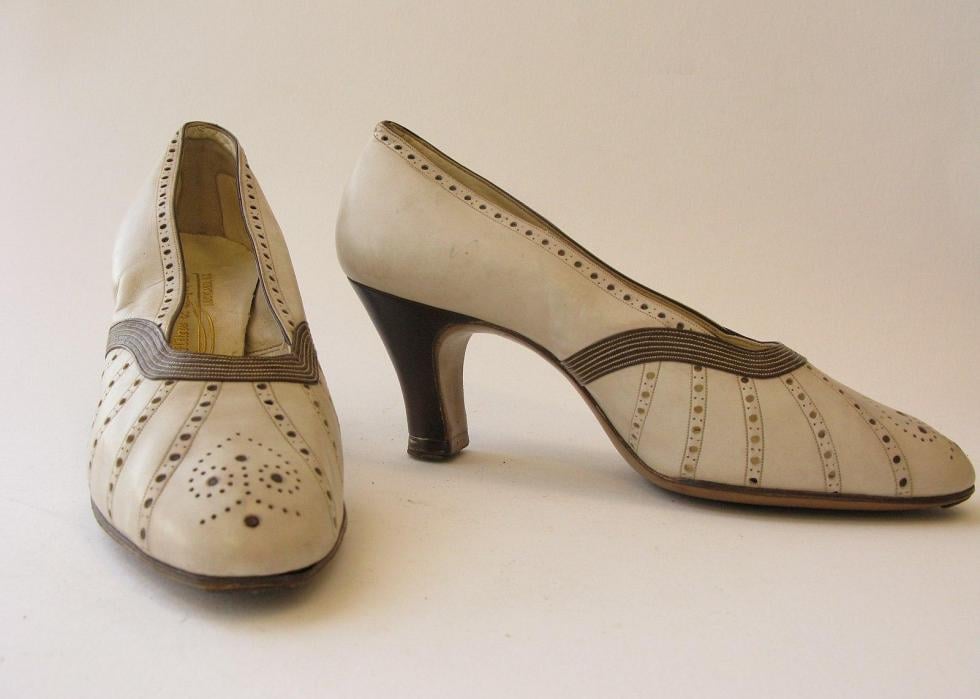
1924: Loftier-heeled shoes
High heels had been around for centuries before the '20s roared—in fact, they were originally designed for men and were often preferred by royalty. In the 1920s, however, the modernistic designer high heel was born. A typical ad from 1924 might offer heels with intricate detailing and an elongated toe with bows or crisscrossing straps, not unlike the kind you'd probable see in a catalog today.
Sobebunny // Wikimedia Eatables
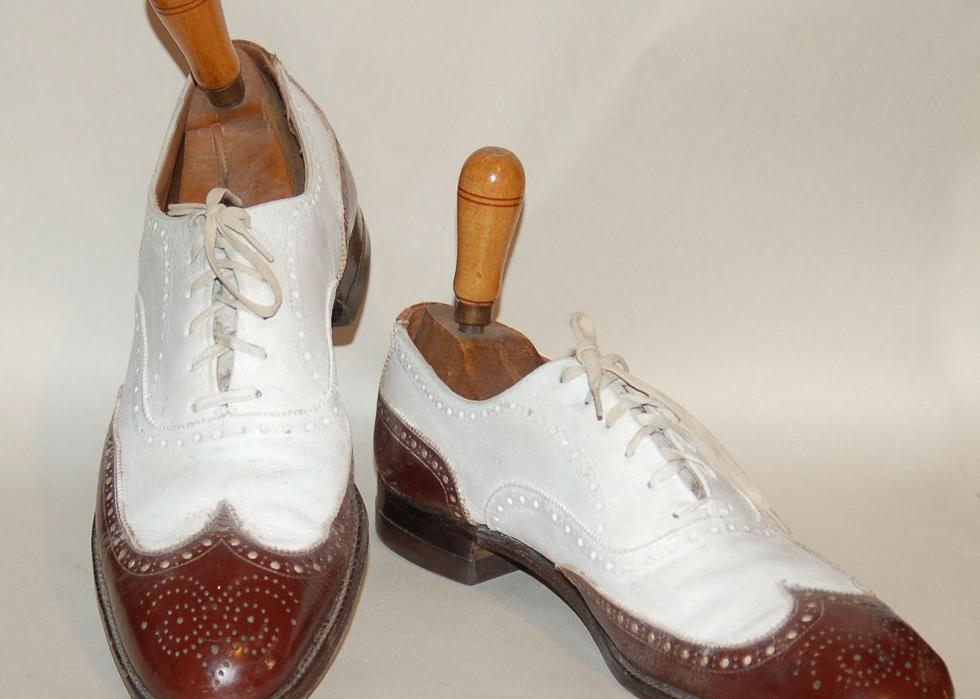
1925: Wingtip shoes
Brogue-style shoes had been effectually long before the 1920s, but during the then-unprecedented affluence of that decade, accessories like shoes and hats became more stylish to keep up with the dapper men's suits of the era. By the mid-'20s, a brogue spinoff called wingtips emerged, and their pointing toe caps, circular perforations and, of grade, swooping "wings" came to define panache in footwear.
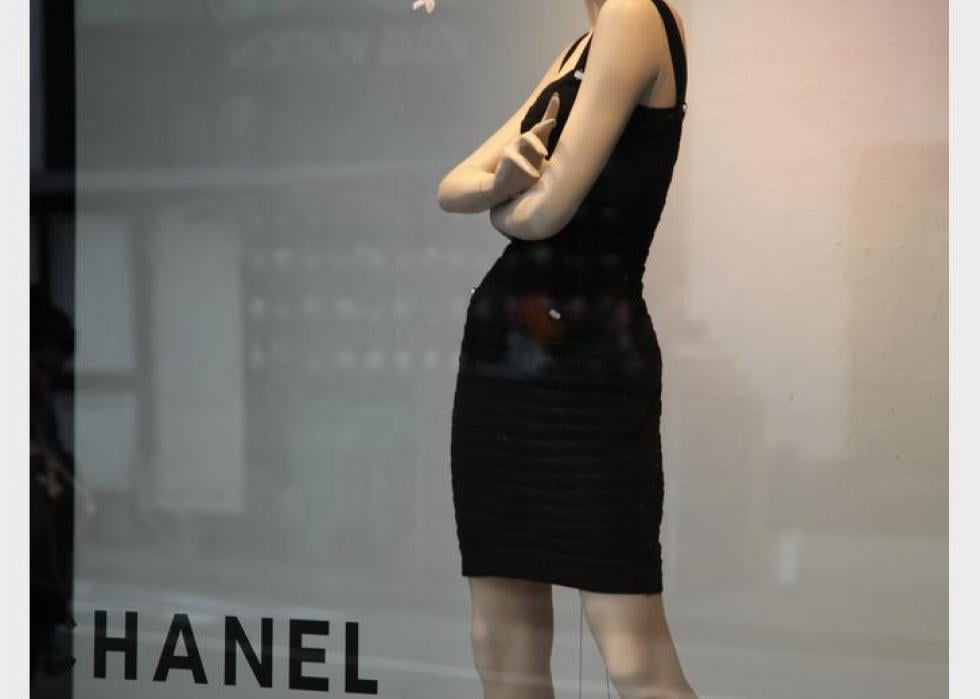
1926: Piddling black clothes
Few pieces of women's clothing are more ubiquitous or indelible than the versatile and reliable LBD—the little black dress. Contrary to popular belief, all the same, it didn't start with Audrey Hepburn in "Breakfast at Tiffany's" in 1961. In 1926, Vogue published a drawing of a basic, narrow-sleeved dress designed by Coco Chanel that the publication dubbed "Chanel's Ford" because information technology was affordable, accessible to the masses and, of class, black.
Paul A Hernandez // Wikimedia Eatables
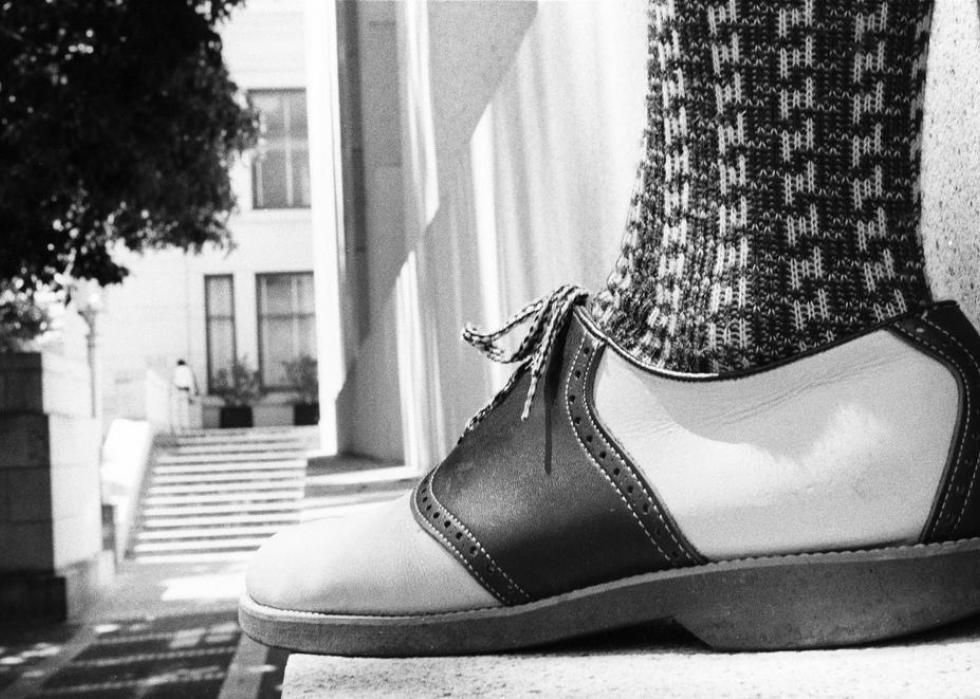
1927: Saddle shoes
A.Thousand. Spalding introduced the genderless saddle shoe in 1906, and past the belatedly 1920s, they had become nearly ubiquitous—a trend that would hold for decades to come up. Preferred past immature people but also frequently seen on older Americans, saddle shoes contain a split piece of leather sewn over the waist of the shoe, ofttimes in a contrasting color.
Lewis Hine // Wikimedia Commons
1928: Newsboy cap
Kids hawking newspapers while shouting, "Extra! Extra!" were a common sight in U.Southward. cities in the 1920s—and their headwear of selection came to be known equally the newsboy cap. Once popular with European elites, the iconic eight-piece cap was available to all castes in the United States, from kids in candy stores to grownup automobile enthusiasts.
Ding Photo Studio // Shutterstock
1929: A bag with straps
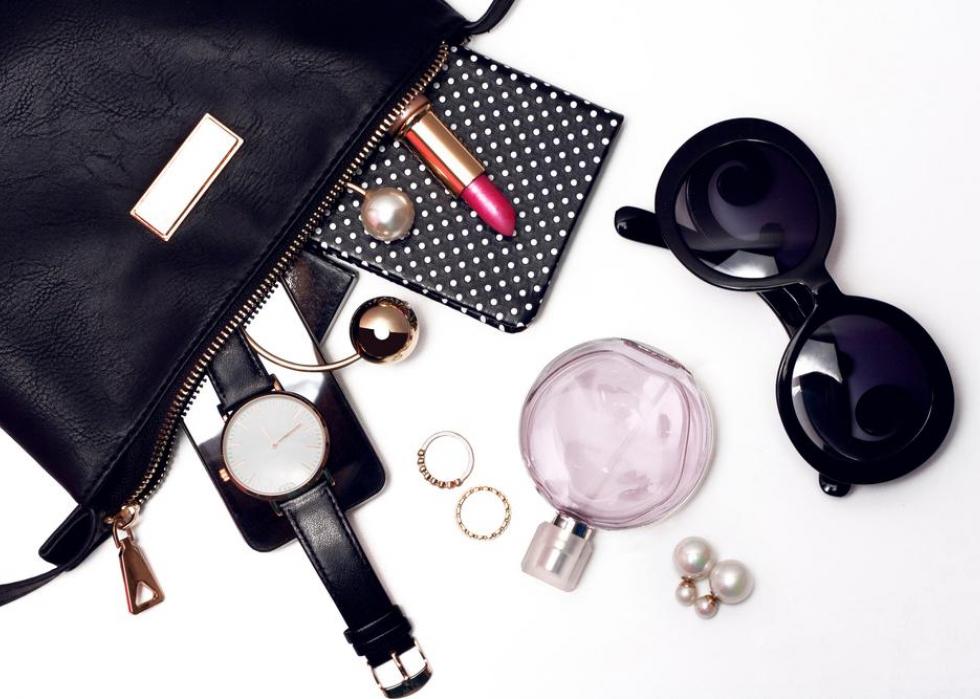
In 1929, groundbreaking designer Coco Chanel did what groundbreaking designers practise: she bankrupt new ground. That year, she designed a new kind of pocketbook inspired past the shoulder slings she saw military men use to comfortably behave their gear. According to Glamour, she said in a biography years later, "I got fed upwards with holding my purses in my hands and losing them, so I added a strap and carried them over my shoulder."
-oo0(GoldTrader)0oo- // Wikimedia Commons
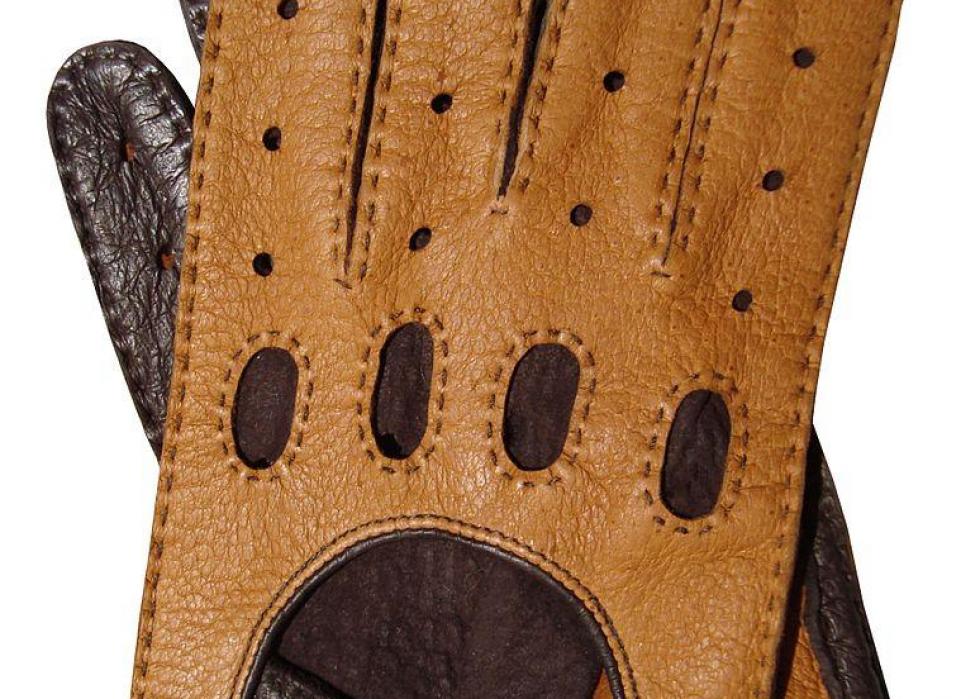
1930: Driving gloves
By 1930, cars were cheaper and more than accessible than they'd e'er been before, and the fashion of the era shifted to reflect America's booming car civilization. By 1930, both men and women sported driving gloves, which by that year had become shorter, thinner, tighter, and unlined to give the fingers a tighter grip on the wheel.
Brooklyn Museum Costume Collection at The Metropolitan Museum of Art // Wikimedia Commons
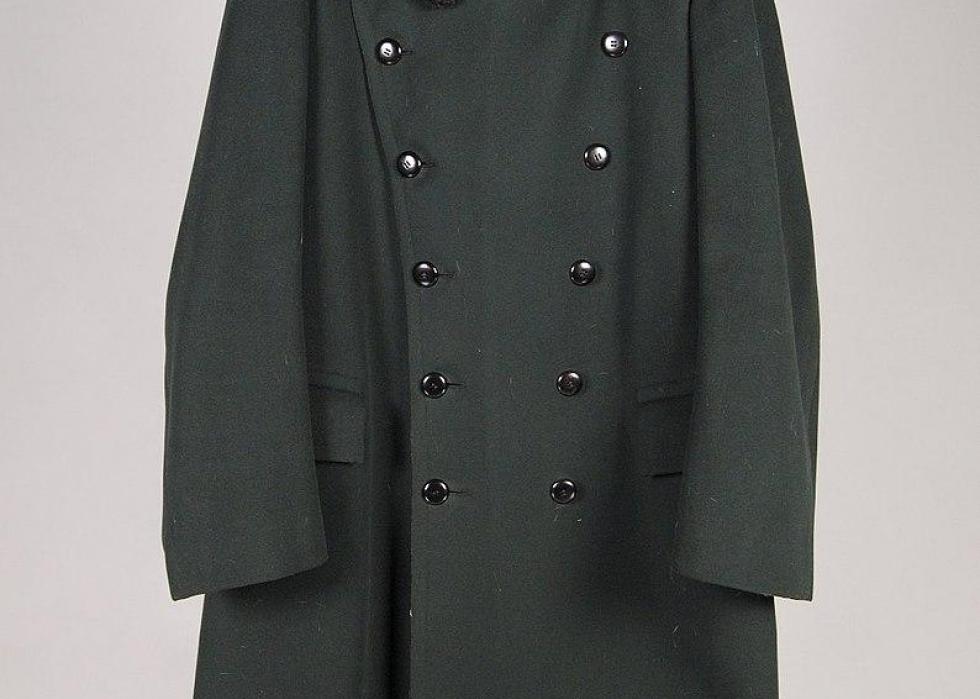
1931: Auto coats
In 1931, driving was part of the American experience—simply the start in-dash car heater was yet years abroad. Car coats, therefore, were a manner tendency born out of necessity. Both men and women wore them, and they were made for unlike seasons, in different styles, and from unlike fabrics. It was mutual to run into people wearing them fifty-fifty when they weren't in their cars.
Artem Avetisyan // Shutterstock
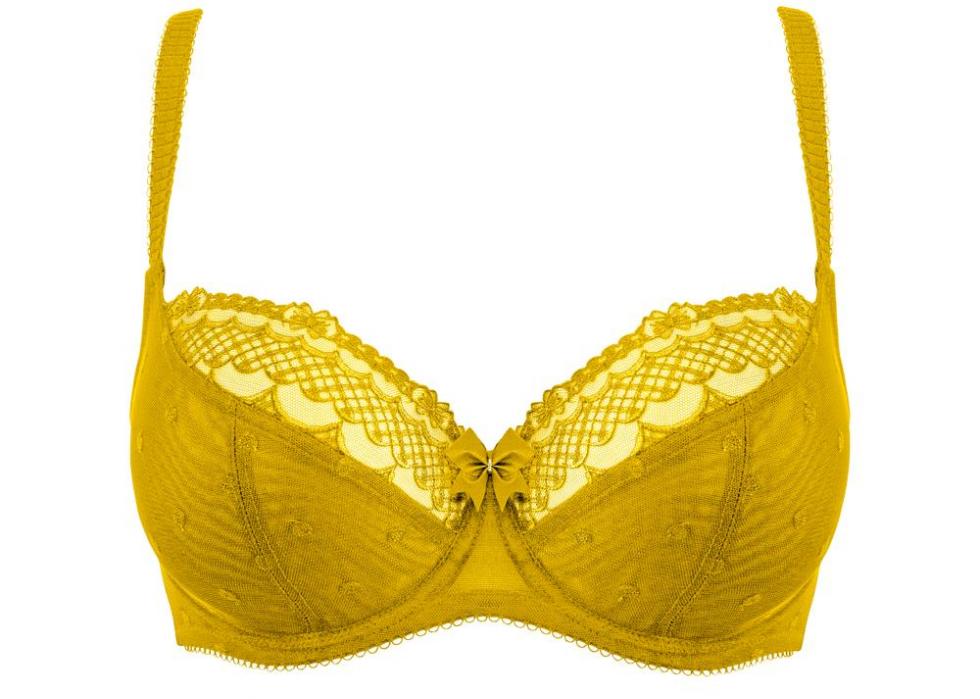
1932: Modern bras
In the belatedly 19th century, primitive Victorian corsets gave way to girdles, which before long gave manner to split superlative-and-bottom women's underwear, which was followed by the brassiere. In 1932, still, three things happened that ushered in the modernistic era. "Brassiere" was shortened to "bra," bras got eyehooks and adjustable bands, and the alphabet-based cup-size system was built-in.
Unknown // Wikimedia Commons
1933: Sport shirts
While formal wear is perhaps the virtually remembered style for men in the 1930s, multiple leisure looks began to take off during the Depression and past 1933, sport shirts were in vogue. Men flocked to buy bush shirts, polo shirts, and push-downs with wide, open up collars.
T. Eaton Co. Limited // Wikimedia Eatables
1934: Ready-to-wearable designer clothes
Designer clothes had long been the exclusive rule of women who could afford to have each piece individually tailored to her trunk, merely all that inverse in 1934. Thanks largely to Chanel's collections and those offered by her imitators, heart-class women were now sporting the high-mode tailored looks long seen in magazines.
IVASHstudio // Shutterstock
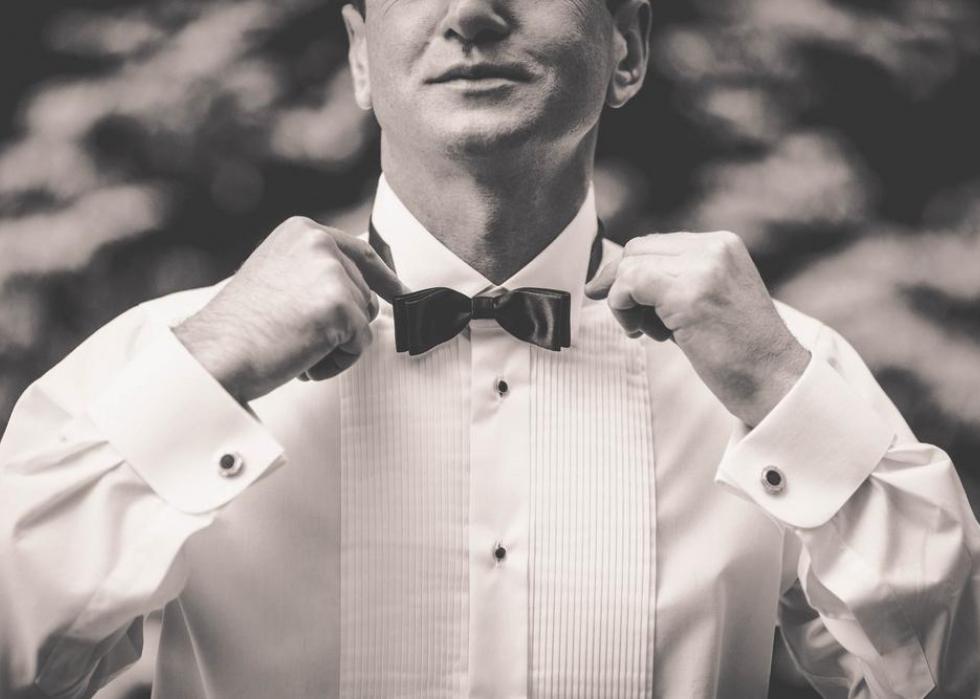
1935: Tuxedos
Tuxedos arrived in Europe in 1865 as a regal culling to formal tailcoats, and past the early on 20th century, America had adopted the tuxedo as the male formal wear of choice. The tuxedo's popularity waned in the '20s, but came back in a big way in the 1930s. By 1935, blueish wool was more pop than black wool, double-breasted tuxes—which would previously have been too breezy—were the preferred wait and black-necktie was dorsum in vogue as white-tie past that point was mostly left to special occasions.
Tlc3707 // Wikimedia Eatables
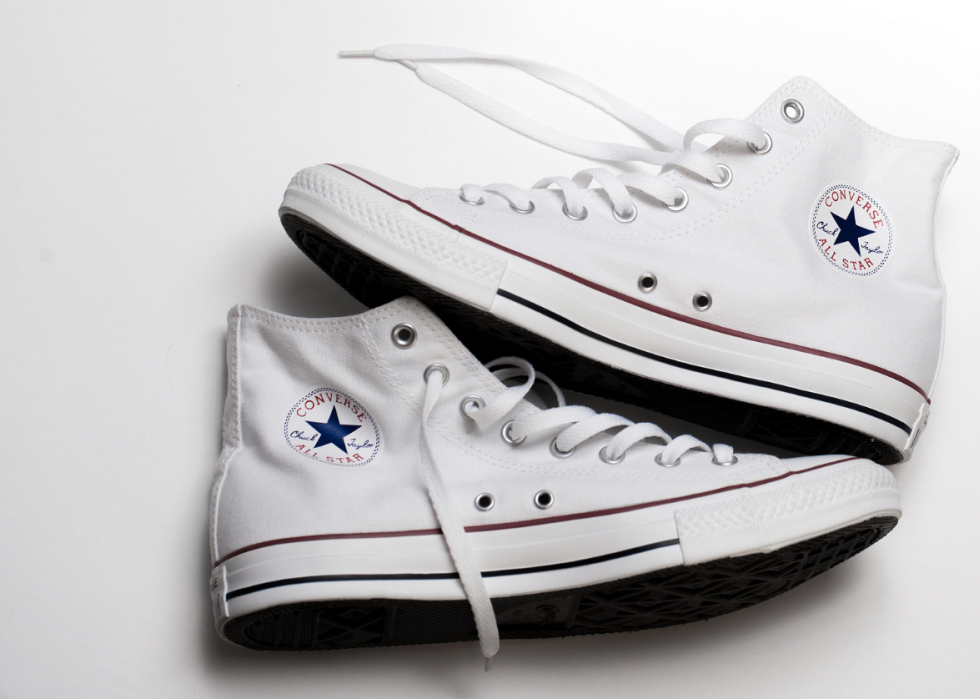
1936: Chuck Taylor All Stars
Although the Converse Rubber Corporation unveiled the All Star basketball shoe in 1917, everything changed in 1936. That year, the familiar canvas shoe—the oldest and acknowledged basketball sneaker in history—debuted in a white loftier-summit model during that twelvemonth's Olympic Games, making it an instant sensation.
Lamarquezahats // Wikimedia Commons
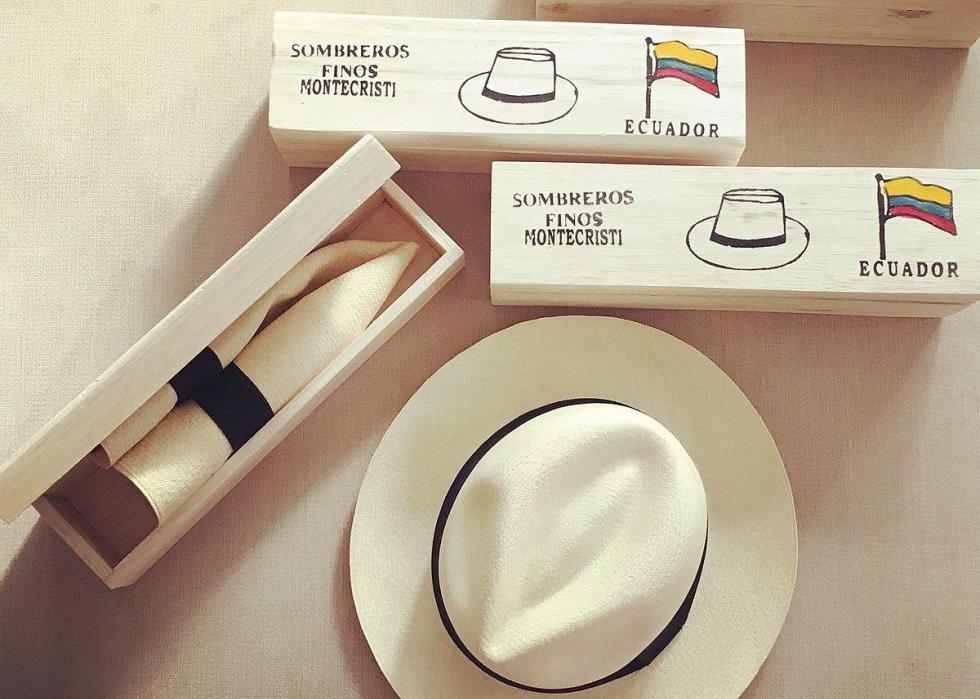
1937: Panama hats
Panama hats take gone in and out of faddy from the early 1500s all the way up to the present solar day. The brimmed harbinger hats enjoyed a massive resurgence in popularity in the late 1930s, however, thanks to stars like Gary Cooper and Orson Welles, who wore them both on screen and in real life. By 1944, hats were Republic of ecuador's principal export, topping even bananas.
Ysbrand Cosijn // Shutterstock
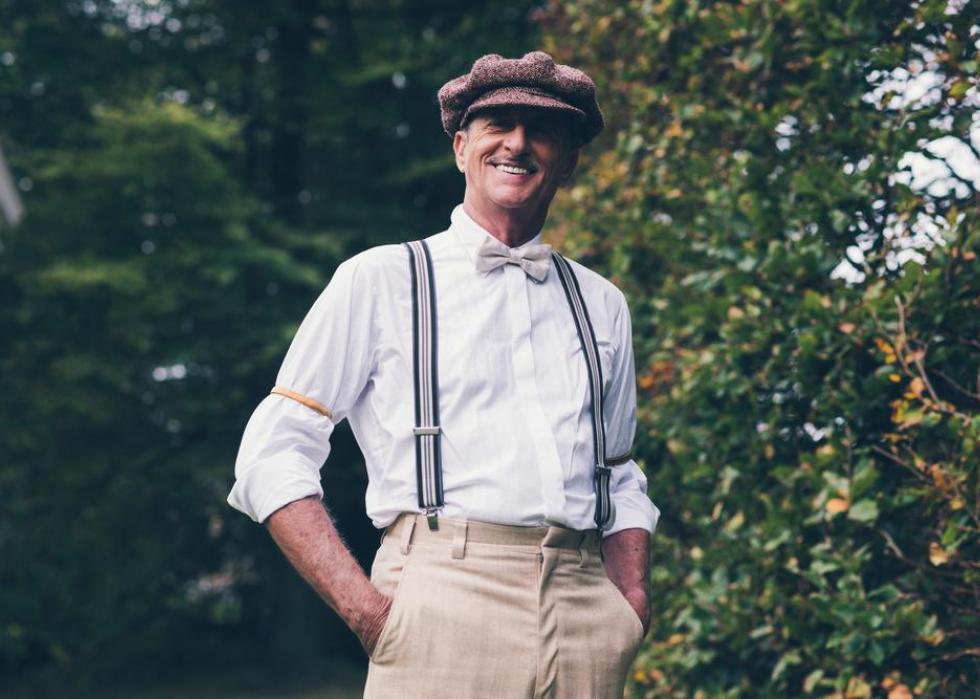
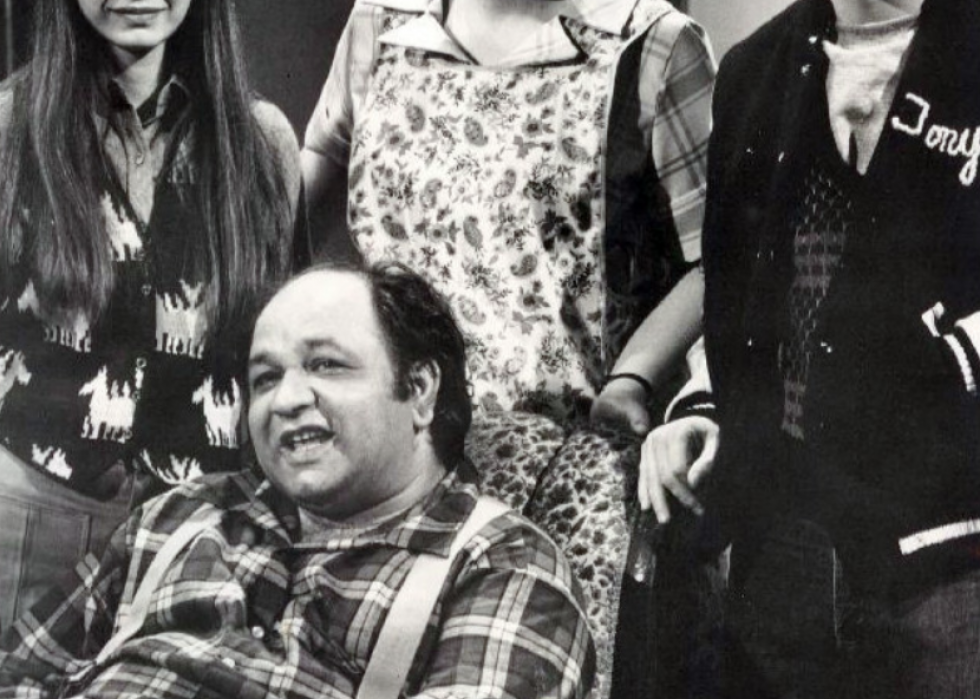
1938: Suspenders
By 1938, the tendency of men wearing visible suspenders was growing, merely it was still considered so risque that one town on Long Island, N.Y., tried to ban men from wearing suspenders without a coat. The ban failed, the trend was set, and actors like Humphrey Bogart would enshrine the await past wearing visible suspenders on the big screen.
Arnold T. Palmer / Library of Congress // Wikimedia Commons
1939: Snoods
Knitted or crocheted hairnets have kept women'southward hair out of their faces since fourth dimension immemorial. In the 1940s, however, snoods soared in popularity—primarily thanks to something that happened in 1939. That year, Vivien Leigh's character Scarlett O'Hara burned them into the American imagination with her operation in "Gone With the Wind."
Lubbock Evening Periodical // Wikimedia Commons
1940: Fedoras
Fedoras accept gone in and out of style from the fourth dimension they arrived at the turn of the 20th century until the nowadays twenty-four hours. The lid's heydey, however, was a vast period betwixt the late 1920s and early 1950s when the functional hat was the finishing touch on the formal attire that men wore in that era—although fedoras have long been popular with women, too. By 1940, the man who would come to define the hat, Frank Sinatra, hit the radio.
U.S. National Archives and Records Administration // Wikimedia Eatables
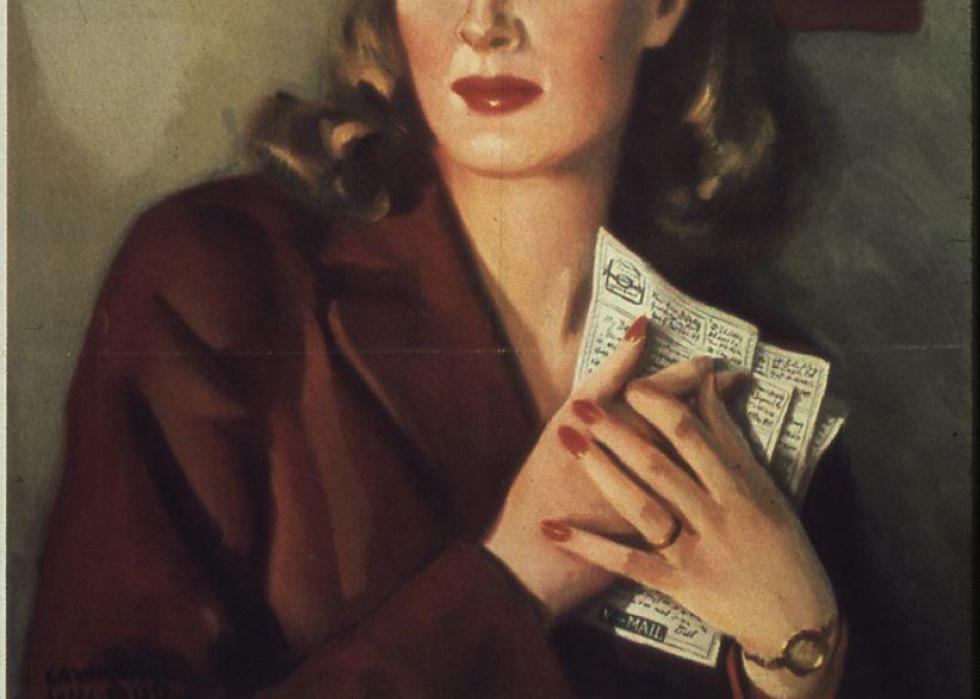
1941: Propaganda scarves
In 1941, the Usa entered Earth War Ii, and by that fourth dimension, caput scarves had already gone from functional garment to high-style accessory. That yr, several companies cashed in on the patriotic fervor sweeping the nation by offering and then-chosen propaganda scarves, which were emblazoned with slogans like "Into Boxing" and "Salve Your Rubber."
Ladies Dwelling house Journal // Wikimedia Commons
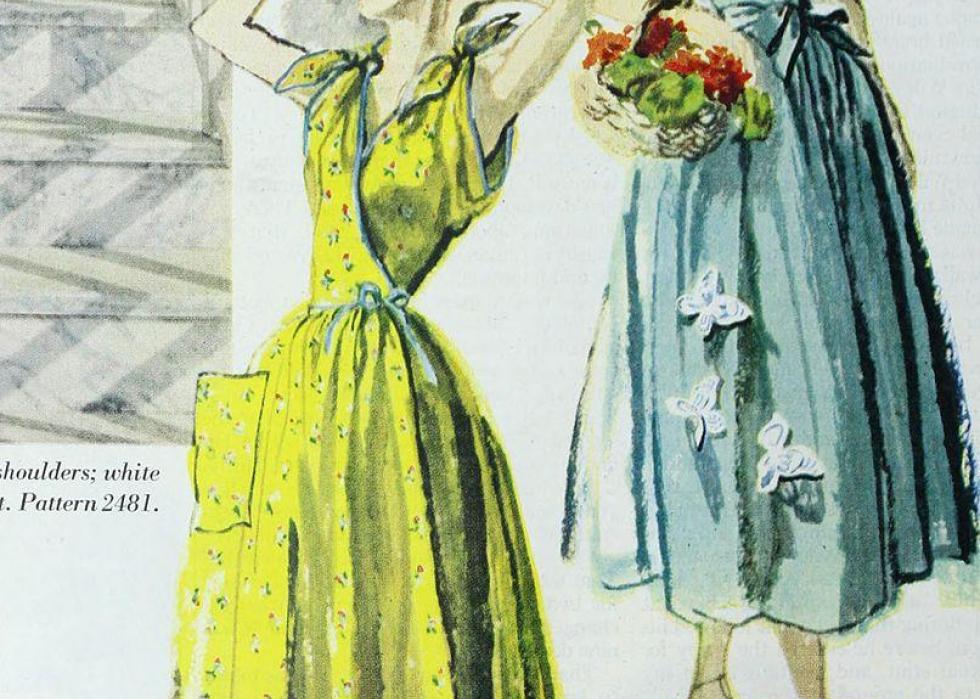
1942: Wrap dresses
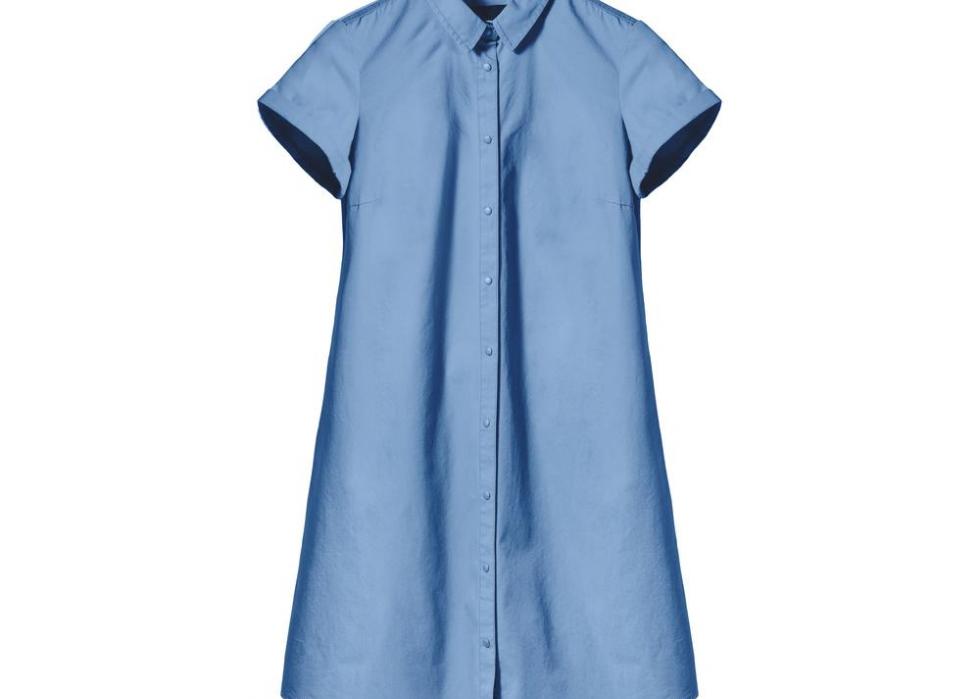
In the early on 1940s, a fancier version of the common day dress came into style—the wrap wearing apparel. Commonly worn to Dominicus brunches or while entertaining guests, wrap dresses had gathers and pleats that wrapped around the front.
Ollie Atkins // Wikimedia Eatables
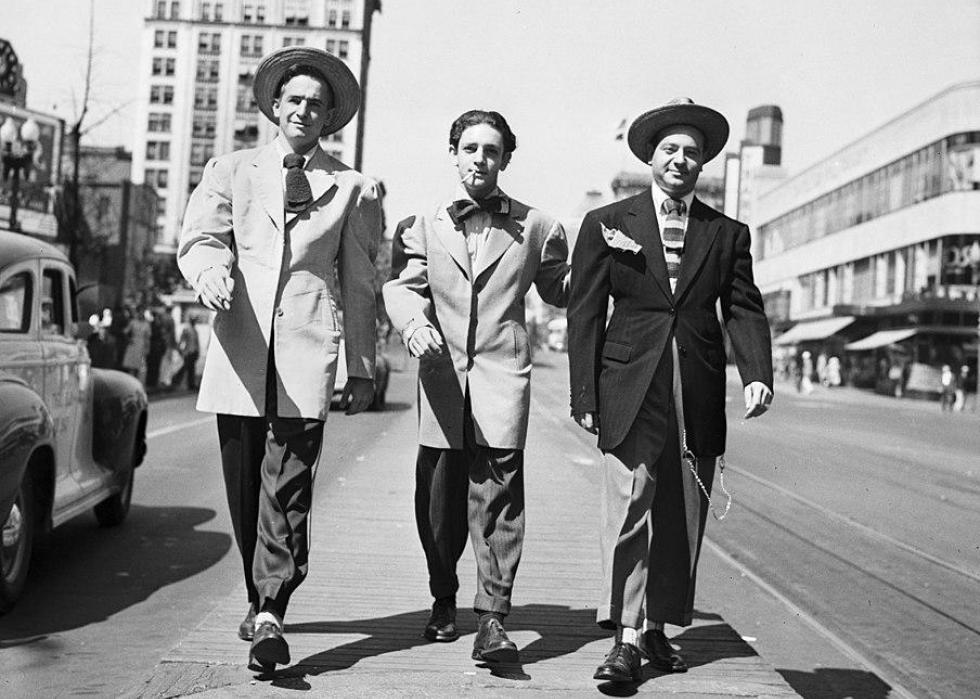
1943: Zoot suits
The Zoot Conform Riots were a serial of attacks in 1943 past white policemen and American service members on young Latinos and other minorities in their ain Los Angeles neighborhoods. Although racial tension and not manner was the source of the mele, the zoot suit became a symbol of the conflict. The baggy suits—which were the preferred fashion for black musicians in New York and Latinos in California—were viewed with suspicion every bit a "badge of delinquency" by much of affluent white America, just equally the hoodie would be seventy years later.
Playingwithbrushes' // Wikimedia Eatables
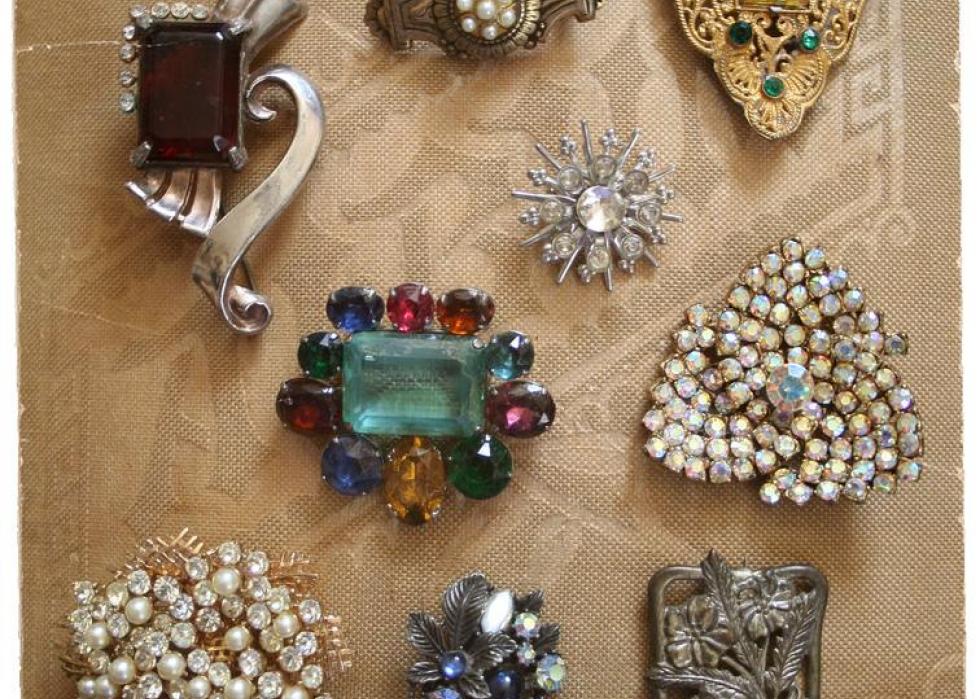
1944: Brooch
By the mid-1940s, a particular kind of jewelry was becoming a common sight. It wasn't worn around the neck, on the fingers, or in the earlobes, just on the lapel. They were brooches, and although they weren't invented at the finish of World State of war Two, that'due south when they enjoyed a groovy of popularity as designer accessories.
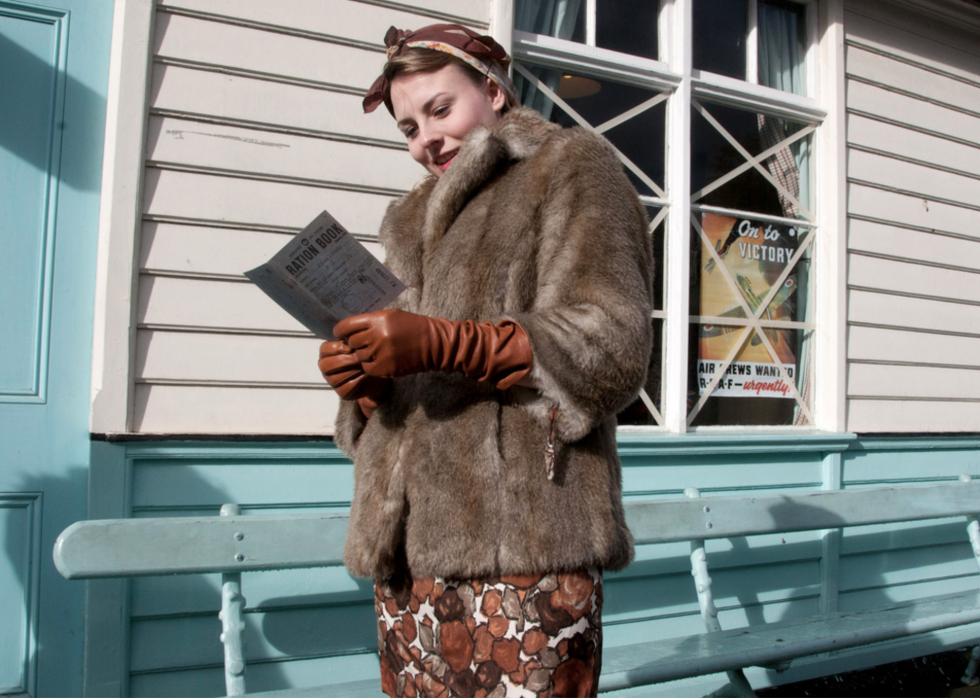
1945: Fur coats
Fur coats have been around for as long equally humans have been killing animals for their skins—sometimes for role, just ofttimes for fashion. Fur equally fashion was, in fact, crucial to mid-1940s style. From muskrat to mink, leopard-stenciled Coney to fitted princess, fur coats were the physical apotheosis of elegance in that era.
Teichnor Bros., Boston // Wikimedia Eatables
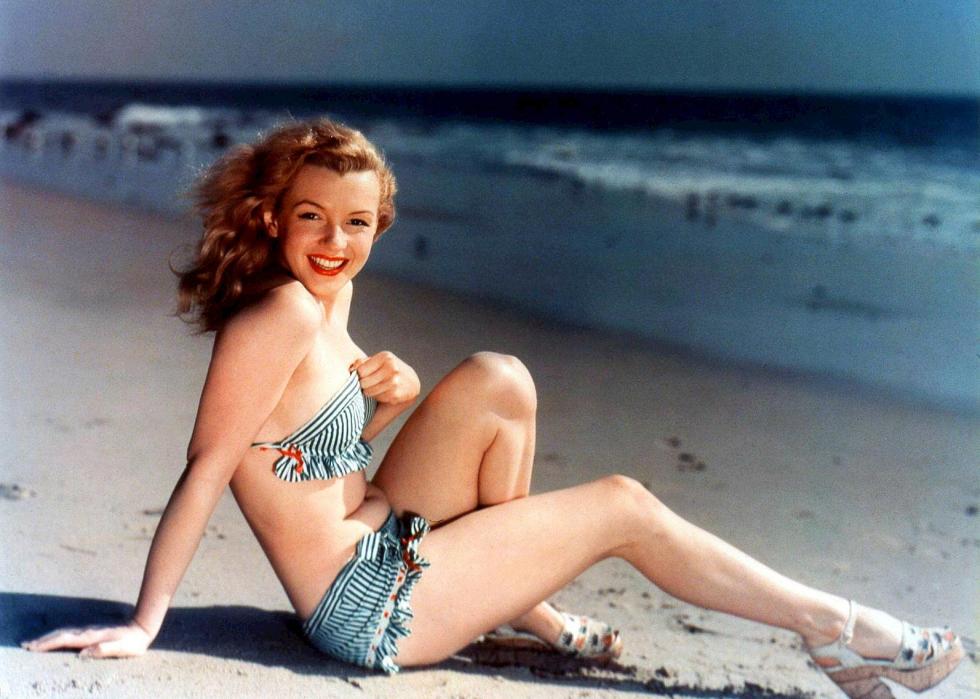
1946: Bikinis
Few moments in fashion history accept been more globe-shatteringly scandalous than the 1 that took place in 1946. That year, the globe's first bikini fabricated its debut at a poolside show in Paris, merely the revealing cutting was and then risque that many French models refused to display it. The designer instead hired a nude dancer named Micheline Bernardini, who was the first woman always photographed wearing i, only certainly not the concluding. Bikinis would soon take over the beaches of the Us and the western earth.
insidehenderson // Pixabay
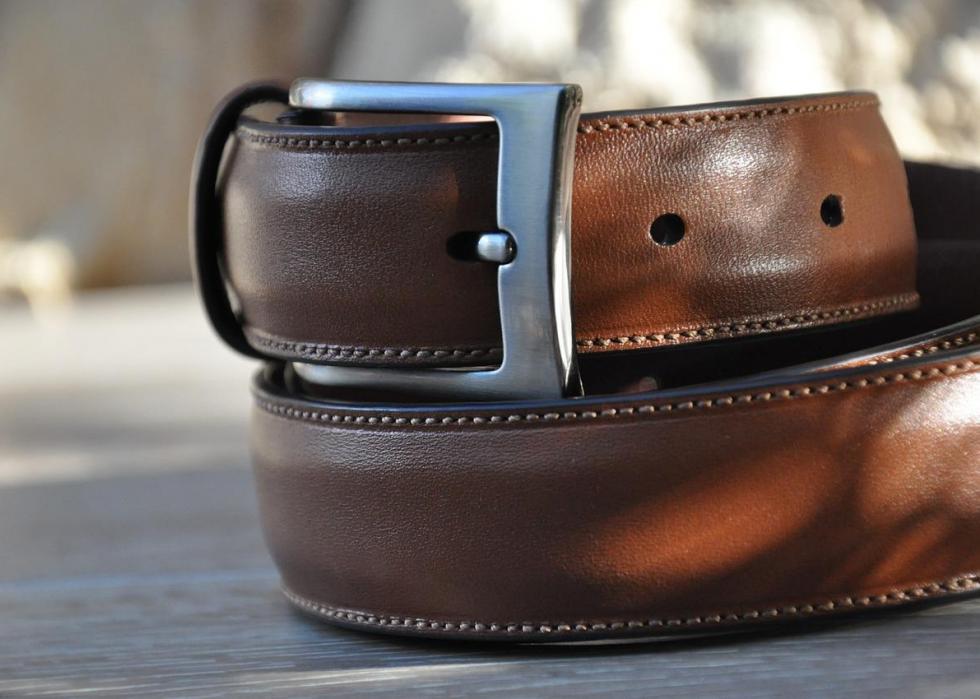
1947: Belts
By the end of the 1940s, belts had largely replaced suspenders considering by that fourth dimension, pants were more fitted at the waist. Men flocked to stock up on the accessory, which was both functional and fashionable, even though the options were limited mostly to tan, brown, or black leather with small buckles.
Erik Holmén, Nordiska museet // Wikimedia Commons
1949: Peep-toe shoes
By the end of the 1940s, peep-toe shoes were a popular footwear choice. They exposed just enough to be dishy without breaching the conservative standards that governed the era.
1950: Pillbox hats
Every bit the 1940s transitioned to the '50s, there were lots of advances in the world of style, but some things didn't change. One of those things was the pillbox hat, a minor, circular, straight-sided hat that sometimes included net veils. It grew past several inches over the years, but remained largely the same. Information technology likewise became i of the only hats that endured from the 1940s into the 1960s, thanks in part to Jackie Kennedy.
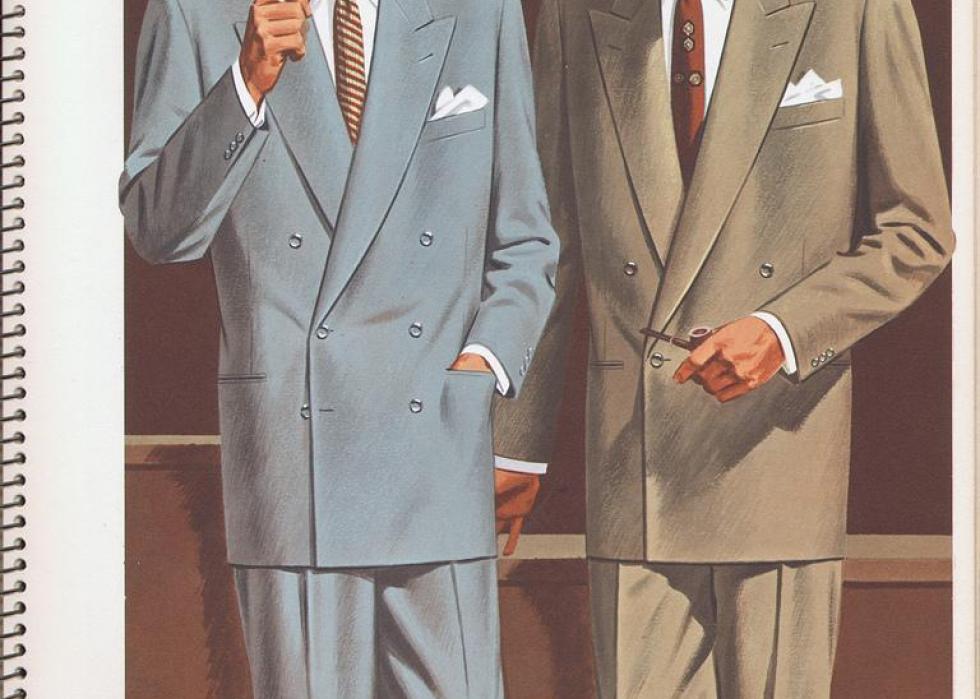
1951: Full suits
The early 1950s signaled the beginning of an unprecedented rise in wealth and employment every bit the U.Southward. economic system boomed. Legions of men moved their families to the suburbs and took upward white-neckband jobs—and those jobs required suits. Dark, full, conservative suits became so ubiquitous, in fact, that they were worn en masse fifty-fifty to the most casual events. When Bobby Thompson hit the "shot heard round the globe" dwelling house run in the 1951 New York Giants pennant game and a crush of fans rushed the field, virtually all of the men were dressed in full suits.
U.S. Regular army Alaska // Flickr
1952: Poodle skirts
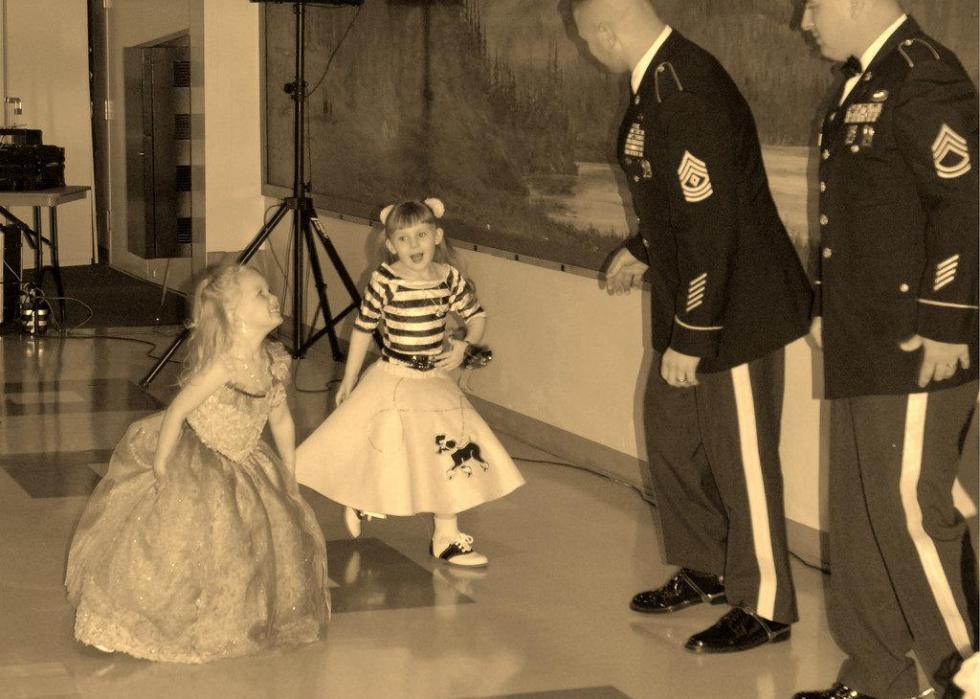
Poodle skirts now serve as a symbol of the innocence of the mail-World State of war Ii era. In the 1950s, withal, they were a mode statement for girls and women beyond America. The full-length, swinging skirts were adorned with handmade embellishments, stitching, designs, and patches, oftentimes sewn on by the wearer or her mother. Among the most famous embellishments was, of class, a poodle on a ternion.
1953: Smoking jackets
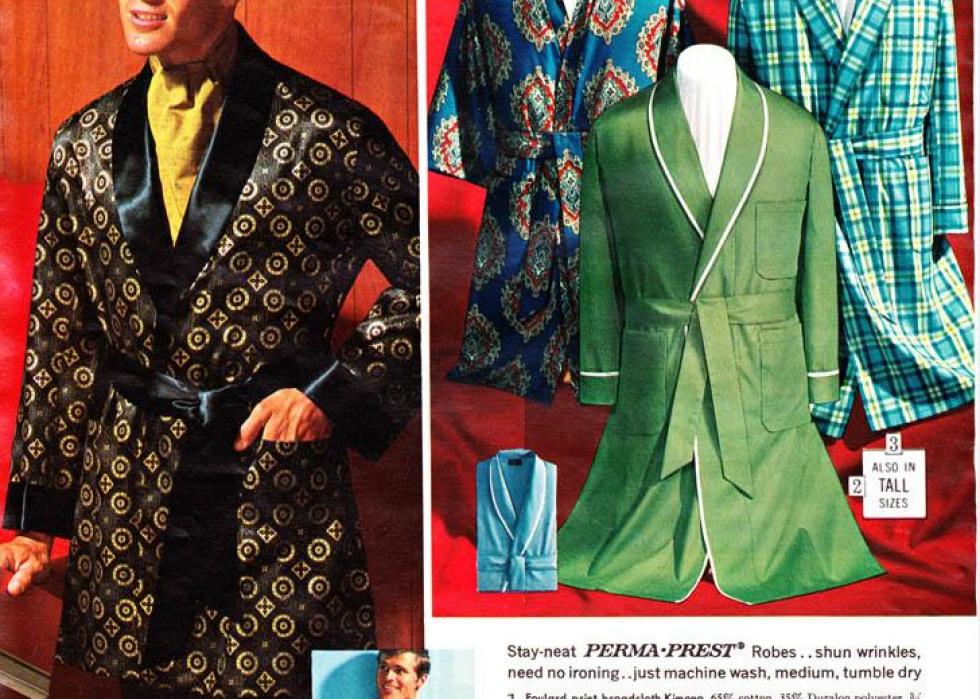
Smoking jackets accept a long and storied history, start equally leisure wear designed only for relaxing at home and and then as formal wear that was appropriate for high-terminate public gatherings. The yr 1953, notwithstanding, was a watershed moment for the velvet and silk shawl-collared garments. That year, the first issue of "Playboy" came off the presses and Hugh Hefner—and his trademark smoking jacket—became a household name.
YourCastlesDecor // Flickr
1954: The pioneer look
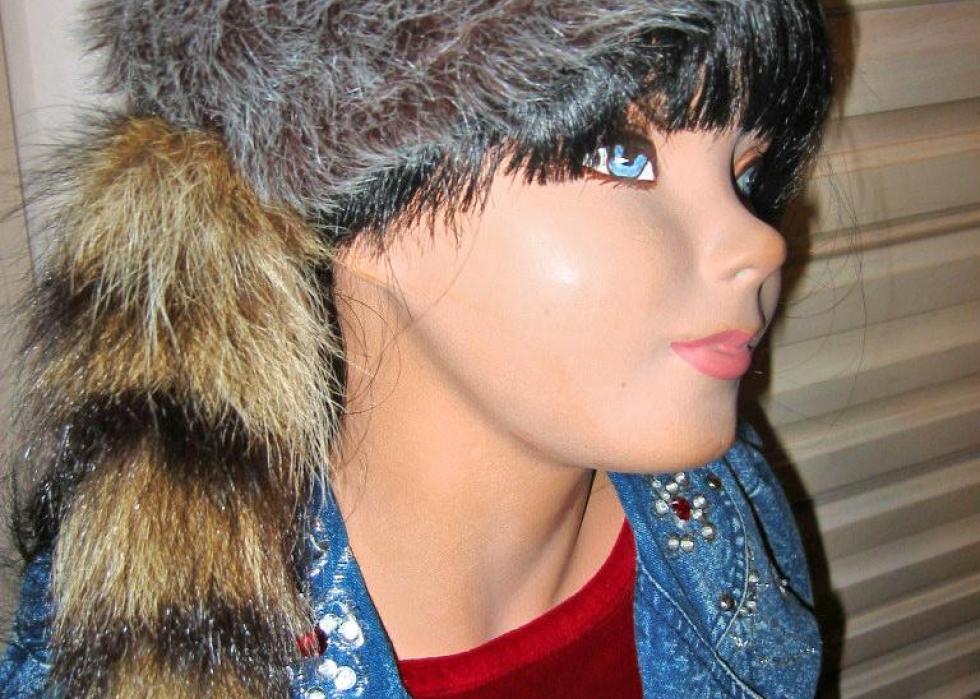
Ruffled buckskin jackets and coonskin caps were functional wearable worn past Native Americans and pioneers for practical reasons, non because they were winning any mode awards. The look largely disappeared right forth with the borderland—until 1954. On December. fifteen of that year, Disney presented "Davy Crockett: Indian Fighter," a one-hour segment that was part of the "Disneyland" boob tube serial, and suddenly, boys across America were begging for archetype frontier clothes.
Liu Wen Cheng 我希望成為 // Wikimedia Eatables
1955: two.55 handbags
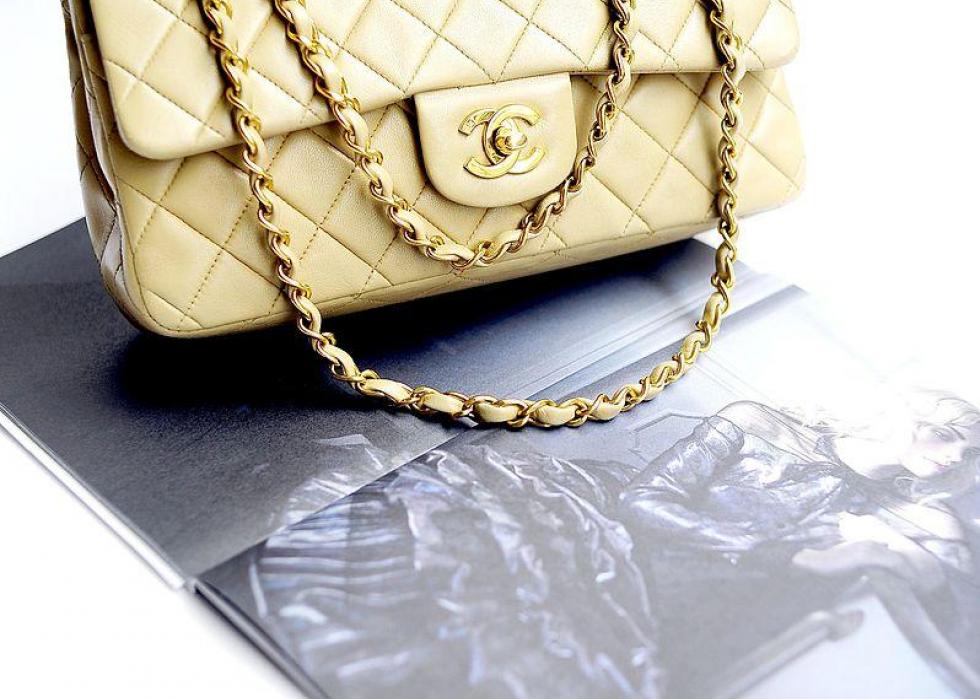
The iconic Chanel 2.55 handbag remains amid the most popular high-terminate purses in the entire Chanel drove—the cheap ones currently start at $two,500. The 2.55 stands for February 1955, the year designer Coco Chanel released the original, which was loosely modeled after the first purse she designed in 1929. Information technology was a watershed month in the history of designer women's accessories.
1956: Denim jackets
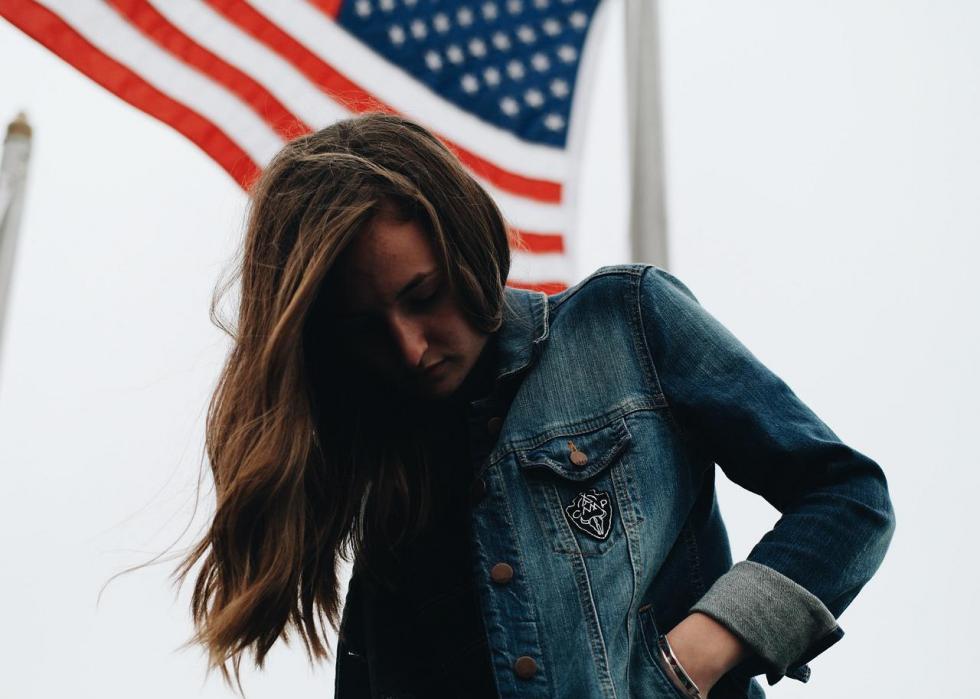
From the Beatles to Bruce Springsteen, Marilyn Monroe to Beyonce, the classic American denim jacket has literally never gone out of style since Levi Strauss designed the original in 1870. In the mid-1950s, all the same, it became the embodiment of absurd youth culture. The New York Times ran sewing patterns for denim jackets for girls and boys, while Levi's unveiled its Type II trucker jacket to the masses.
Everett Collection // Shutterstock
1957: Berets
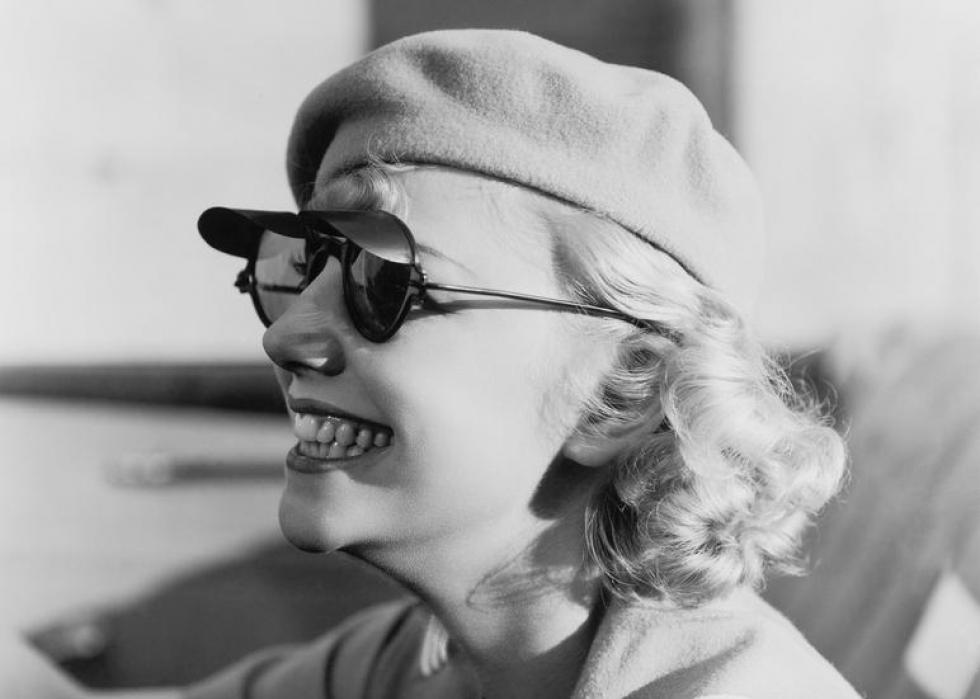
Exemplified by Jack Kerouac, Allen Ginsberg, and William Burroughs, the beat out motility immortalized the kind of coffee shop cool portrayed in the picture show "Funny Face" and in Kerouac'south classic novel "On the Road," both of which debuted in 1957. If you were enamored of the culture that year, chances are good you owned a black beret, which was a trademark of beatnik stylings.
Magdalena Wielobob // Shutterstock
1958: Chemise
In 1958, women across America were wearing dresses that were spitting images of what the French queen Marie Antoinette popularized equally undergarments in the 1780s: the chemise. Directly cutting and unfitted at the waist, the chemise had long been a staple of women'southward underwear and dark wear, merely that all inverse in 1957. That year, Parisian designers Christian Dior and Cristóbal Balenciaga unveiled straight, unbelted chemise dresses, and past 1958, the figure-concealing game-changers had gone mainstream.
Public Domain // Wikimedia Eatables
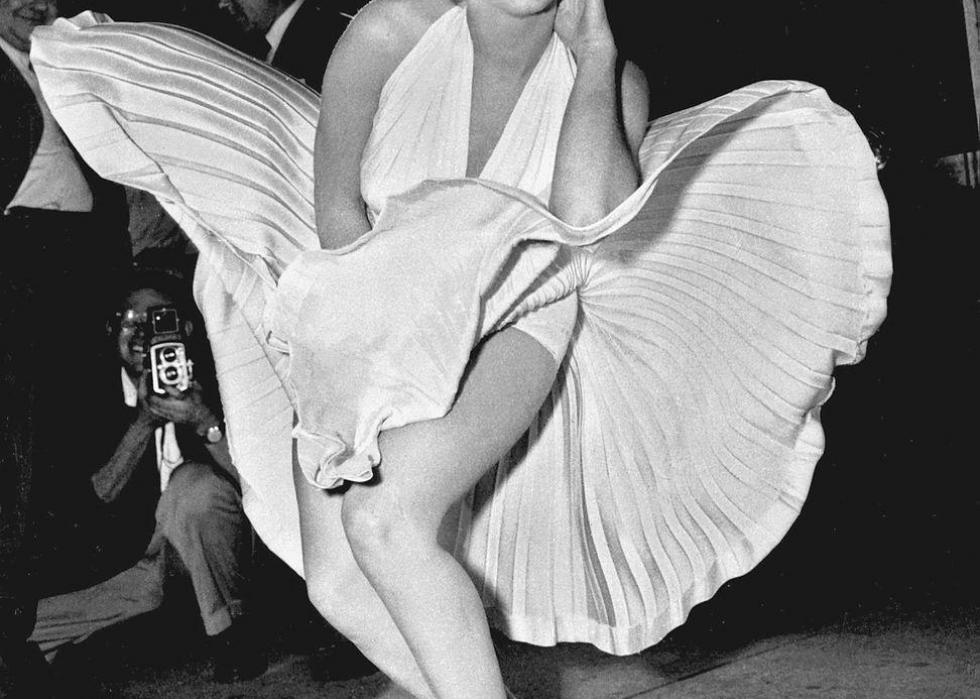
1959: Halter dress
The most famous halter dress in history is the one Marilyn Monroe wore in "The 7 Year Crawling," which the starlet coyly struggled to keep in place after a blast of air from a street grate. The movie came out in 1955, but halter dresses were popular throughout the decade.
Viktoria Minkova // Shutterstock
1961: Bug-eye sunglasses
In 1960, John F. Kennedy was elected president and he, along with his wife Jackie, would go the embodiment of loftier social style and graceful elegance. The first lady's trademark oversized "problems-heart" sunglasses would evidence to be a trendsetter, and by the post-obit year, women everywhere were hiding behind them.
Durene Association of America, New York // Wikimedia Commons
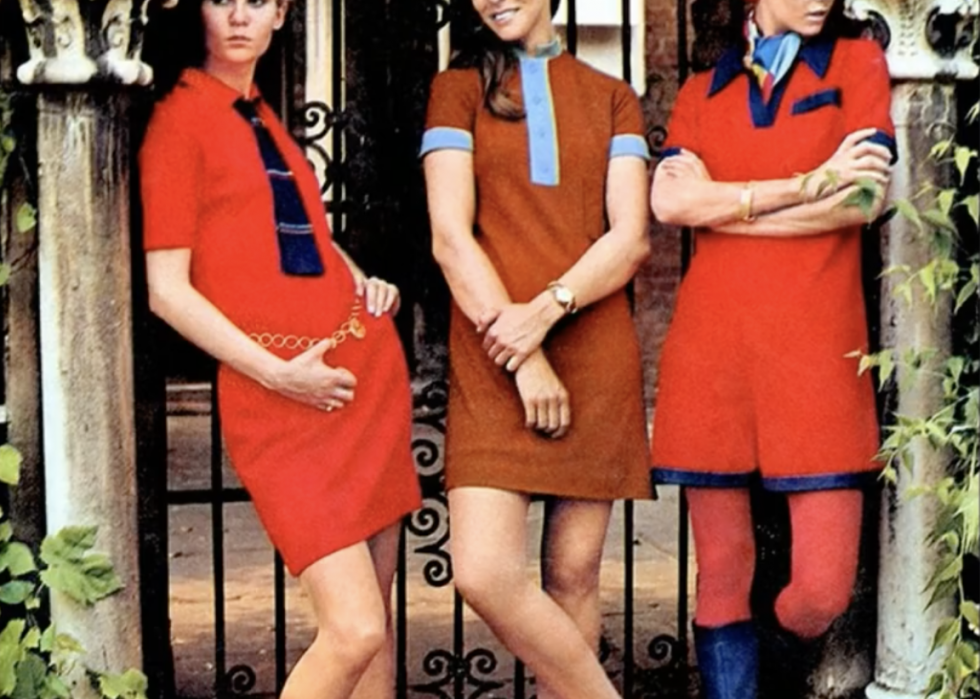
1962: Miniskirts
Although versions of it existed throughout history, a certain fashion staple didn't hit the mainstream until 1962. That yr, a newspaper in Montana made the get-go known reference to the earth'south virtually controversial hemline: the miniskirt.
1963: Pleatless pants
The 1960s were an uneven decade in terms of manner, and pre-British Invasion 1963 looked much more like the '50s than the latter part of the '60s. There was 1 shift, however, that signaled a dramatic sea change in conceptions about formality. That year, it became widely acceptable for men to vesture pants without pleats.
Yesterday Today // YouTube
1964: Become-become boots
Before the 1960s, boots were mainly designed for function, non form. That all inverse, nevertheless, in 1964 when André Courrèges unveiled a new kind of women'southward boot in his fall 1964 collection. The white, plastic, calf-high boots were role of his Moon Girl look— go-get boots had arrived.
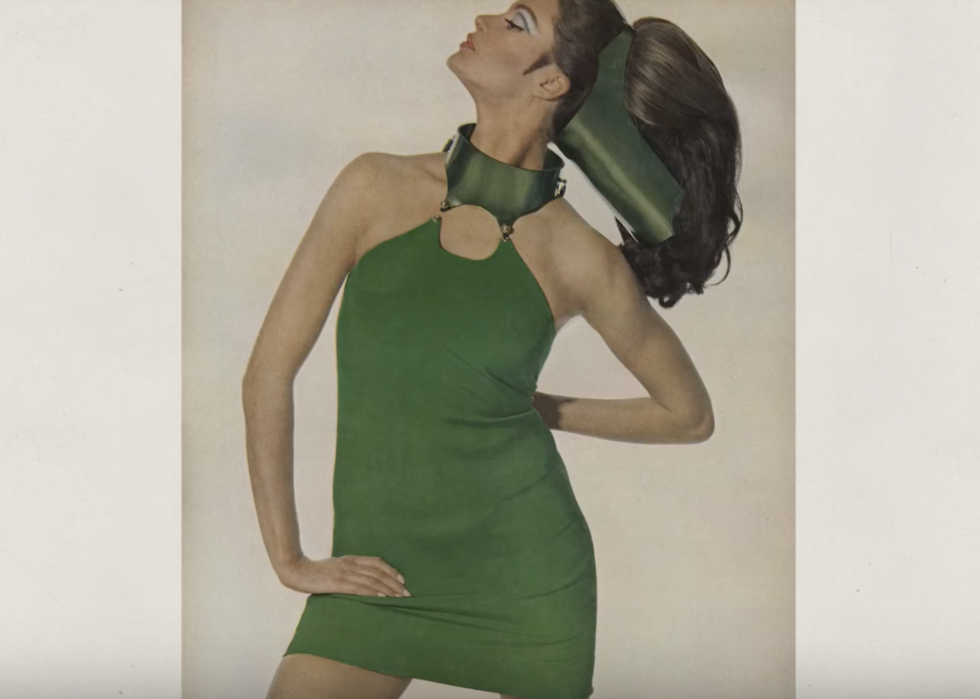
1965: Cutouts
In the mid-1960s, it wasn't at all unusual to run across women with a chunk of their apparel missing—don't worry, information technology was on purpose. The wait was chosen the cutout, and windows through wear could be small or sizable, round or square. They could be found on the backs of dresses or on the bellies, on the sleeves, on the neckline, or even on go-go boots.
Ida Tolgensbakk // Wikimedia Commons
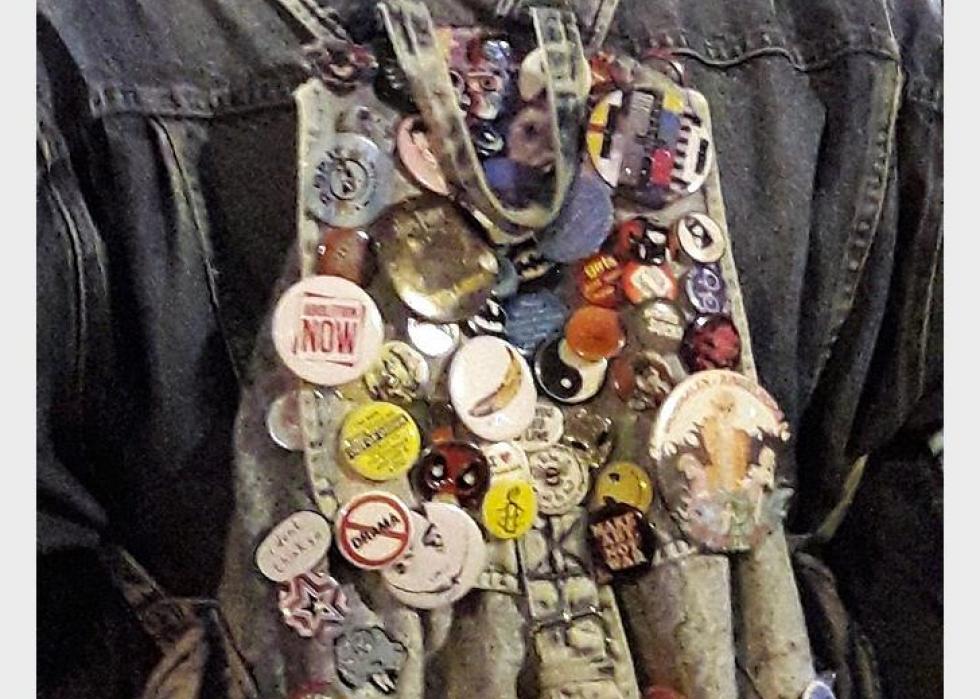
1966: Slogan buttons
Little buttons safe pinned onto clothing had long been a staple of political campaigns, with "I like Ike" and other slogans serving every bit personal statements for those who wore them. By 1966, withal, the Vietnam War was raging and social turmoil was engulfing the country dorsum home. Slogan-pasted buttons pinned onto shirts, pants, backpacks, and jackets became a staple of the counterculture wardrobe, with familiar letters including "Hell no, we won't go," "Ban the flop," and but "Peace."
Andrzej 22 // Wikimedia Eatables
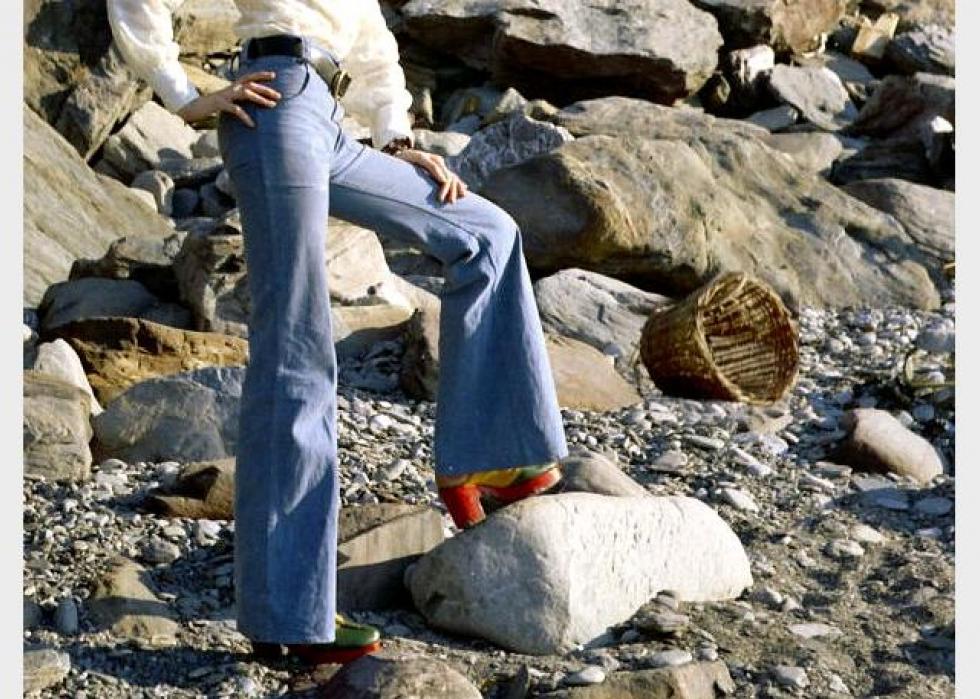
1967: Bong-bottoms
Though they're more commonly associated with the 1970s, bong-bottoms got their start in the belatedly 1960s, as cultural icons hit the boondocks with flared pants. Jimi Hendrix, Sonny and Cher, and Twiggy all promoted the look. So did Nancy Sinatra, who wore an especially memorable gear up of bedazzled white flared pants on her 1967 television special Movin' with Nancy. No wonder Vanity Fair later called bong-bottoms one of the fashion revolutions of 1967.
Zolotarevs // Shutterstock
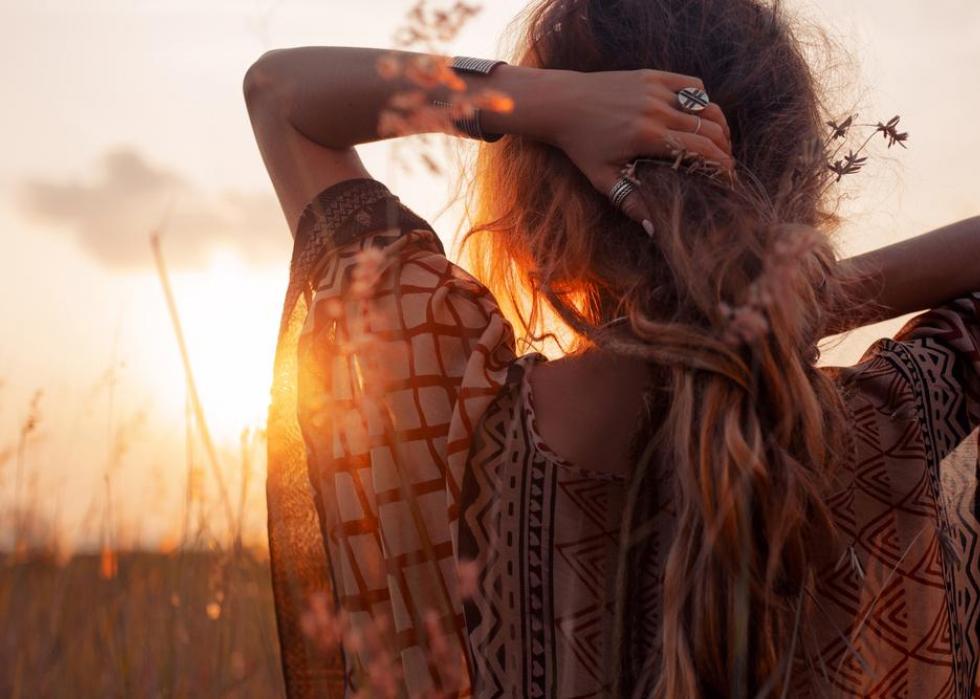
1968: Bohemian chic
Many young people in 1968 weren't hippies, only hardcore-hippie clothing rubbed off on mainstream society in the class of a tendency that celebrated hippie civilisation without fully embracing it—bohemian chichi. That year, peasant blouses, decorative handwork, and ruffles upon ruffles could be plant far beyond Greenwich Village and Haight-Ashbury.
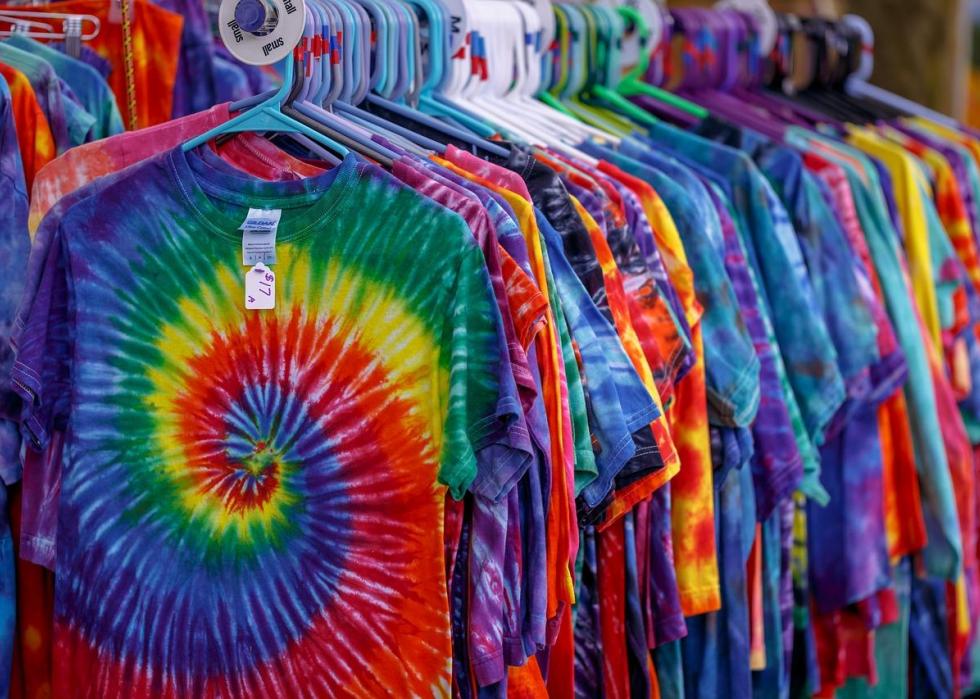
1969: Tie-dye
If the radical 1960s counterculture motion had a uniform, information technology would have to include tie-dye. Handmade rainbow wearable had divers the era's youth motility for several years, but in 1969, there was no doubt that tie-dye was king. That yr, a one-half-million people gathered for a music festival in Woodstock, N.Y., and both on stage and in the sea of humanity in the crowd, necktie-dye could be seen—at least on those whose wearing apparel weren't covered in mud or who weren't wearing clothes at all.
Lenscap Photography // Shutterstock
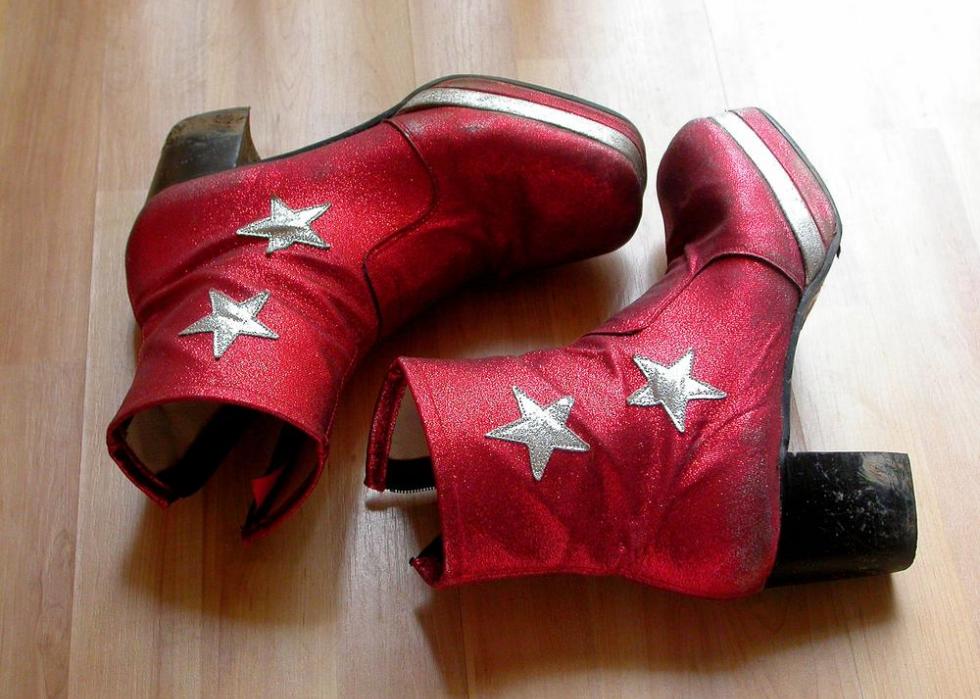
1970: Platform shoes
In the 1970s, people everywhere suddenly got taller. Although Salvatore Ferragamo famously designed a pair of rainbow platform sandals for Judy Garland in 1938, platform shoes truly emerged in the 1970s. Men and women embraced the rising, and the trend would suffer for the entire decade.
Anefo // Wikimedia Commons
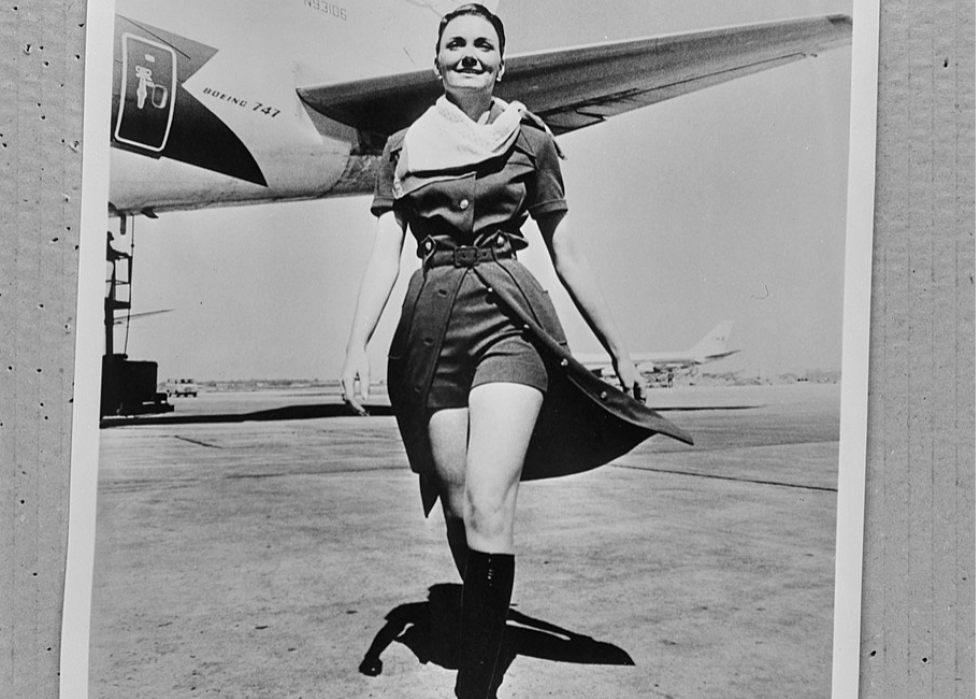
1971: Hot pants
The loose, draping ruffles of the maverick chichi movement weren't dead in 1971, but they were starting to take a back seat to a more revealing and grade-plumbing fixtures style. That style was exemplified past hot pants. James Dark-brown dedicated an entire song to the hip-hugging garment in 1971'south "Hot Pants (She Got to Use What She Got to Go What She Wants)." Meanwhile, women ranging from Elizabeth Taylor to Raquel Welch proudly donned the brusk shorts.
ABC Goggle box // Wikimedia Commons
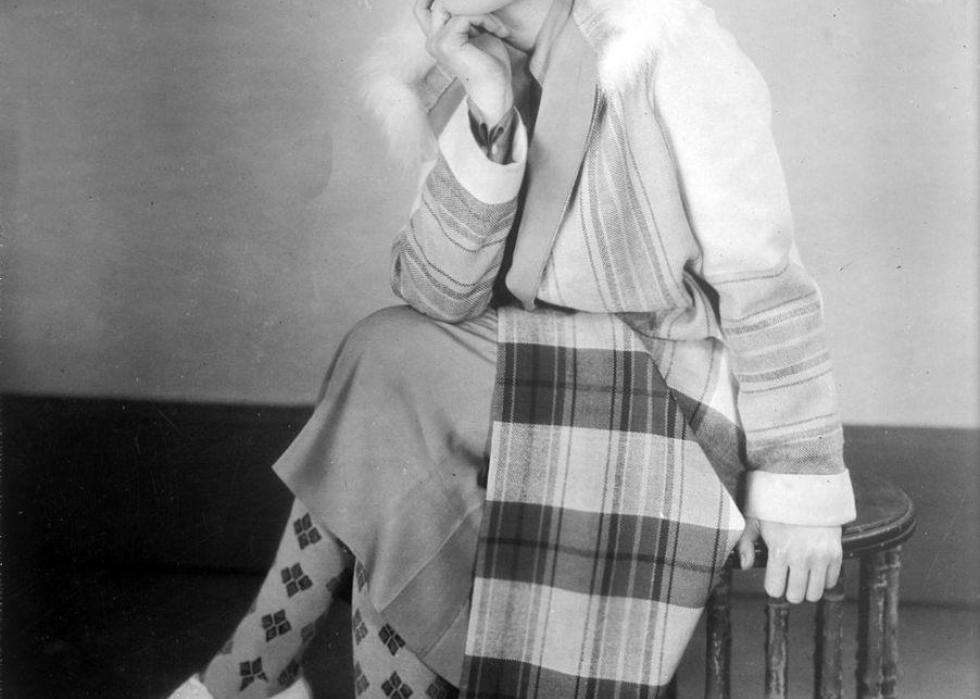
1972: Plaid
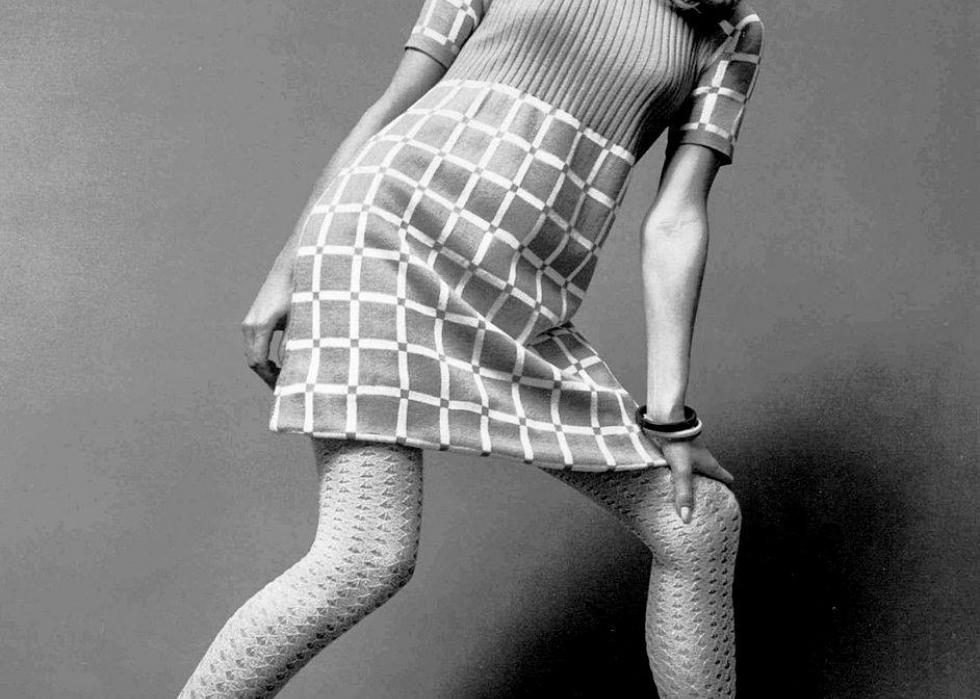
By 1972, the '70s were truly the '70s, and section stores had the plaid to prove information technology. The crisp, linear wait of plaid would accept likely turned off counter-civilization fashionistas in the '60s—plaid, subsequently all, is made entirely of squares. By the '70s, however, plaid was acceptable—encouraged, even—on just about any blazon of textile and all types of vesture, from hats to socks to jackets to shirts to pants and beyond.
Alena Ozerova // Shutterstock
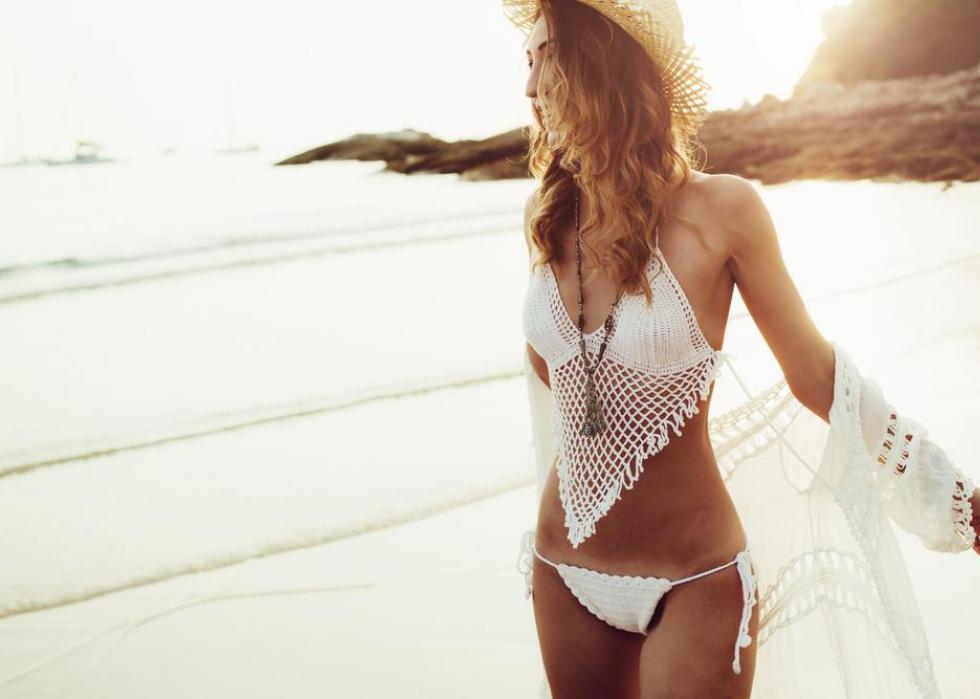
1973: Crocheted bikinis
Past the early 1970s, crochet bikinis were in. The woven swimsuits got their first big intermission in 1969, whenCosmopolitan put its covergirl in a green crochet bikini. The New York Times called the swimwear a "favorite" of boutique designers in 1971, and pretty soon Pam Grier was lounging poolside in a white knit two-piece.
HousingWorksPhotos // Flickr
1974: Polyester
If platform shoes were the footwear that defined the 1970s, polyester was the fabric. The 1974 Sears catalog was an homage to the constructed cloth, which was spun into shirts, dresses, pants, jackets and, later on, unabridged suits, many of which were topped off with cartoonishly massive collars.
Shannon Due west // Shutterstock
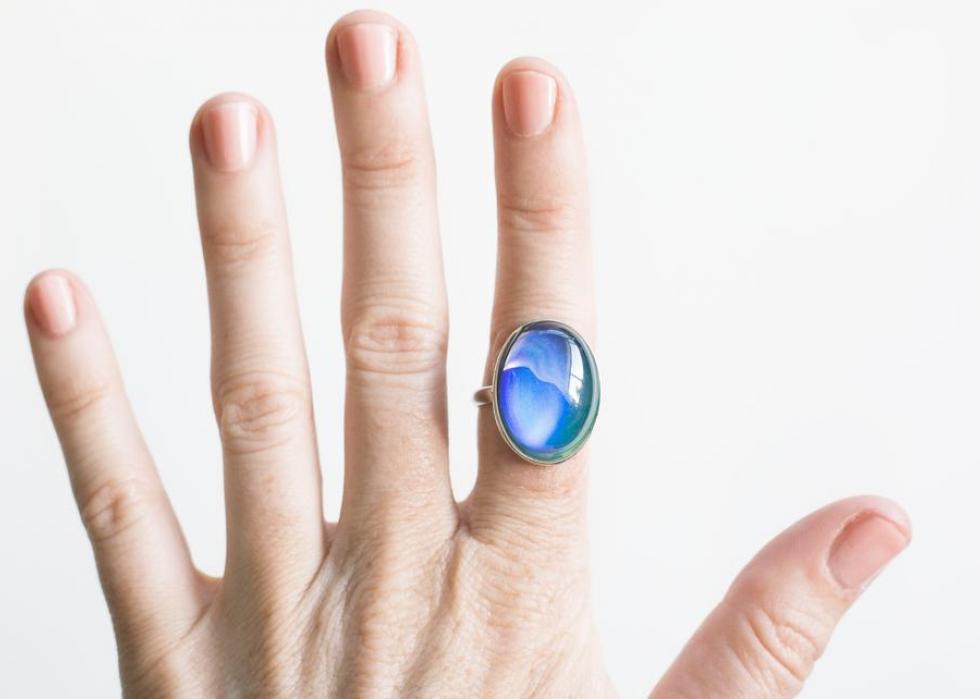
1975: Mood rings
In 1975, '60s mysticism collided with '70s capitalism in i of the virtually successful fashion fads in history: the mood band. Similar so many other fads, the color-shifting jewelry first institute popularity in New York City but apace spread every bit introspective soul searchers hoped to get a deeper understanding of their inner selves by peering into oestrus-sensitive crystals worn on their fingers.
menswear-market.com // Flickr
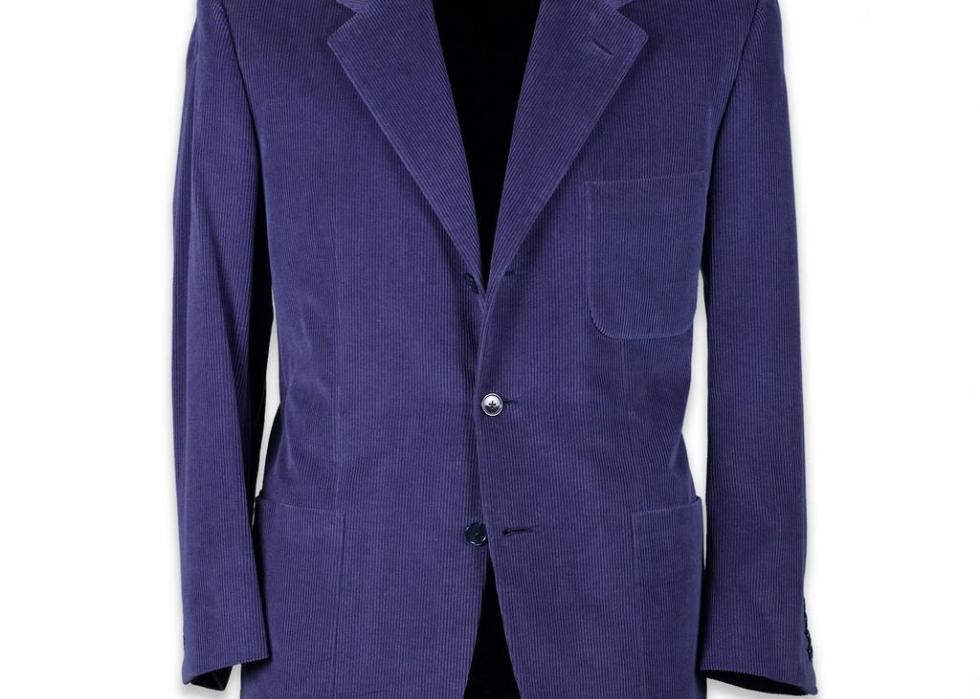
1976: Corduroy suits
If your legs brand a swooshing sound when you walk, chances are good you lot're wearing corduroy pants. The corded woolen cloth dates back thousands of years, and information technology remains a fall staple for some to this solar day. By 1976, however, the heavy fabric was a sign of the times equally entire suits were made from the ribbed, united nations-wrinkleable cloth, which was sometimes worn head to toe.
vincent desjardins // pxhere
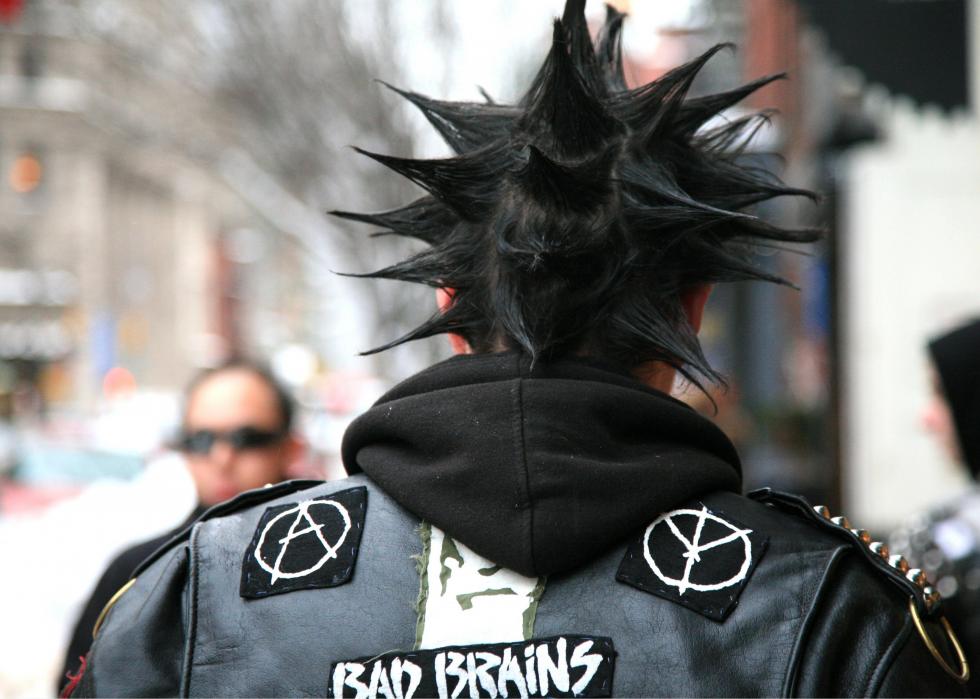
1977: Punk jackets
Sometimes denim, sometimes leather, always daring, punk jackets were a visible symbol of youthful rebellion in 1977. Equally cities decayed, ghettos widened, and crime and unemployment soared, punk stone emerged to embody the spirit of youthful malaise and, of course, to terrify parents. Designed to offend, punk jackets could be studded, bedazzled, torn or spiked, but all were required to be adorned with a bulletin—the more combative, the better.
Nick-D // Wikimedia Eatables
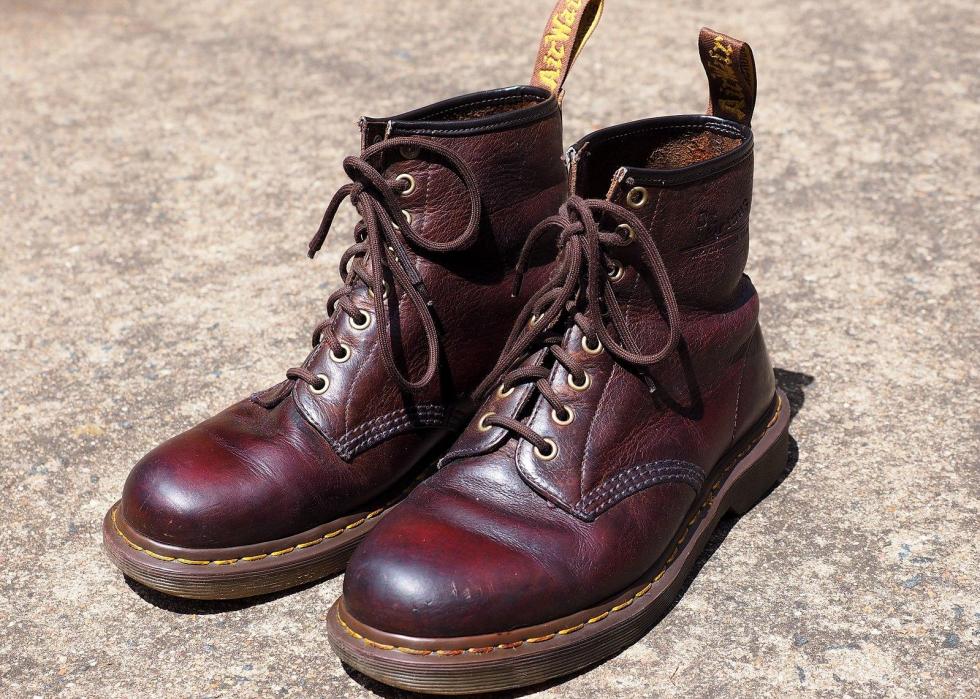
1978: Doc Martens
Similar so many manner trends, Doctor Marten boots and shoes were built-in out of necessity—the heavy footwear was originally designed to protect the anxiety of blue-neckband workers who labored in dangerous industries. In the 1970s, withal, they were a directly expression of the anarchic rebellion that divers the times. What started with punk would re-emerge over and over over again with unlike musical movements: metal, pop, emo, alt, grunge, rave, and beyond.
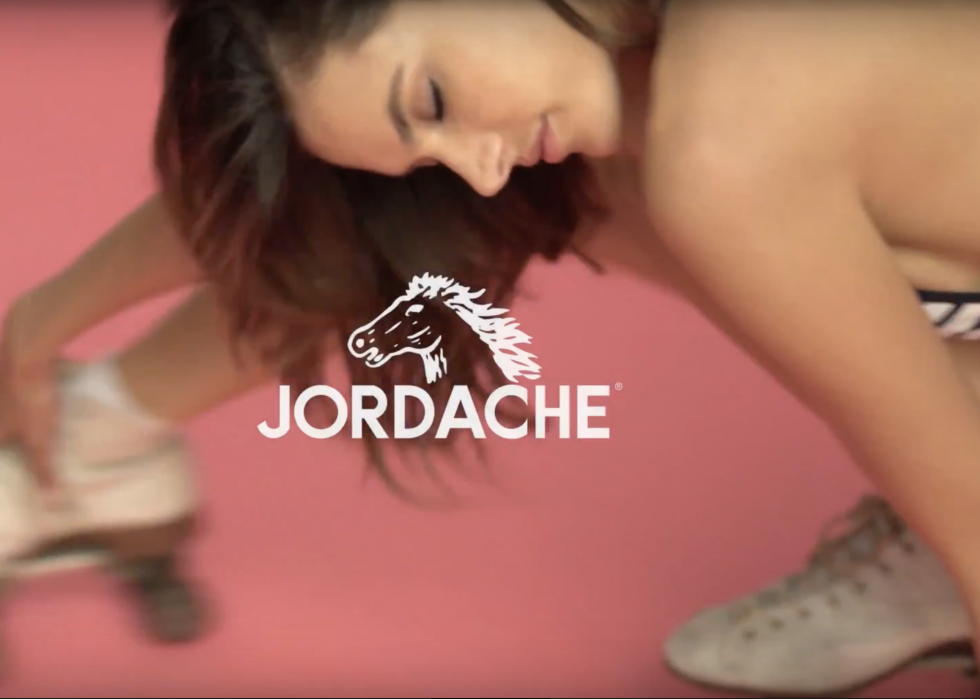
1979: Jordache jeans
Past the time Jordache stormed the manner world in 1979, the company had already been in concern for 17 years. But the company's meteoric rising can exist traced to an ingenious ad campaign that featured a seemingly topless woman wearing skin-tight Jordache jeans, and zilch else, while riding a horse. She was soon joined by a shirtless homo, too clad but in Jordache denim. The networks refused to air the ad but a few New York stations picked it upwardly, which stirred controversy—and overnight success for Jordache.
New Africa // Shutterstock
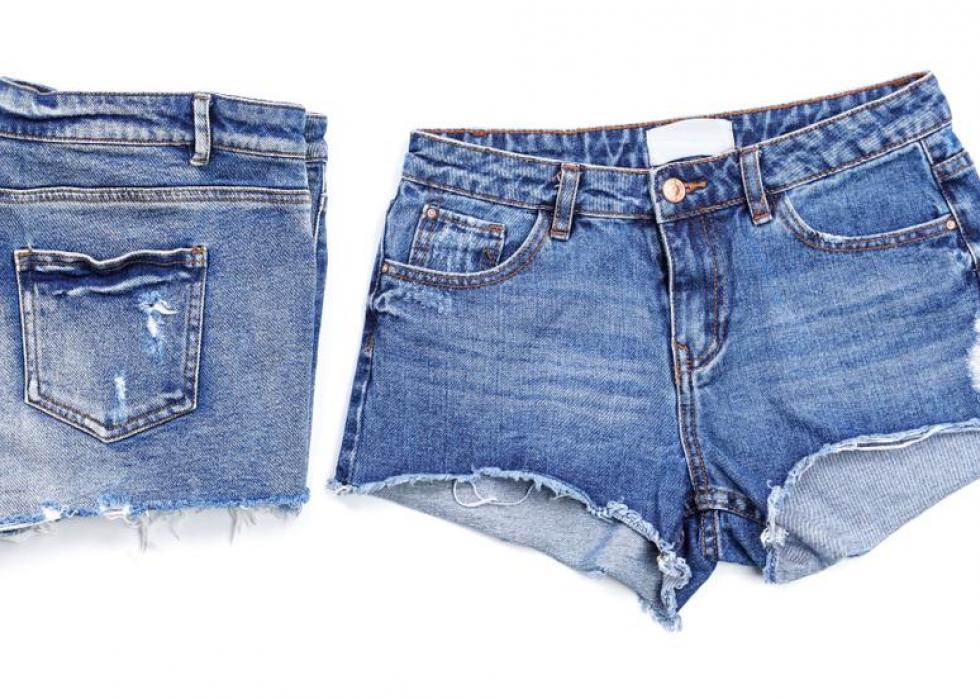
1980: Daisy Dukes
First, there were miniskirts, and so there were hot pants, merely 1979 launched what simply might be the nigh iconic trend in the history of ogle-inducing, leg-revealing mode. That yr, "The Dukes of Hazzard" debuted, starring Catherine Bach every bit Daisy Duke. She was an instant sex symbol, the denim cutoffs she wore became synonymous with her graphic symbol's name, and by 1980, short shorts got just a piffling bit shorter.
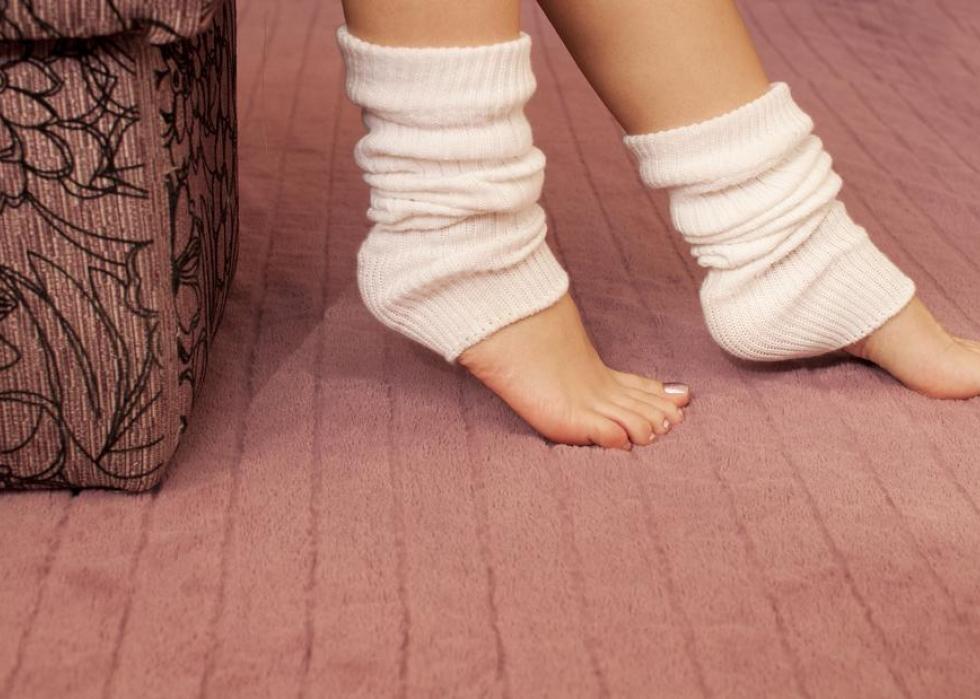
1981: Leg warmers
In the early on 1980s, the aerobics craze took off, and at that place was obviously widespread fearfulness that the exercise fad could somehow freeze the legs of its practitioners—just only below the knee. Thick, footless socks—often colored in bright neon—began appearing en masse on shins and calves both inside practise classes and out. The era of leg warmers had arrived.
panthera leo heart vintage // Flickr
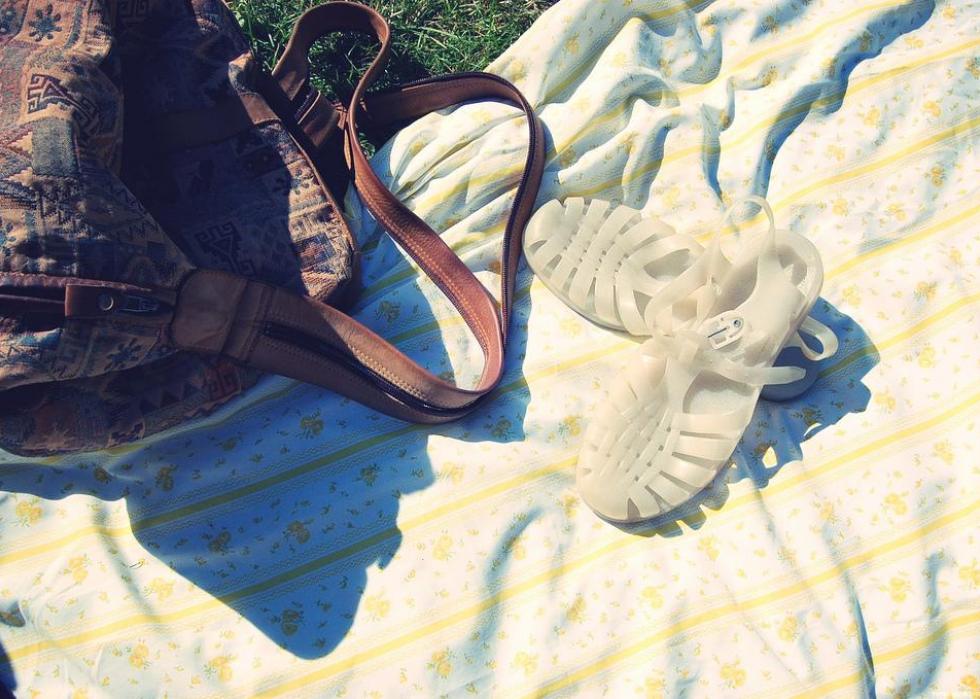
1982: Jelly sandals
Rubberized plastic shoes were the footwear of choice for girls and women alike all across America in the early 1980s. They've gone in and out of style in the ensuing years, but jelly sandals enjoyed their truthful heydey starting effectually 1982, when Grendene Shoes claims to have introduced them.
Schröder+Schömbs PR _ Brands // Flickr
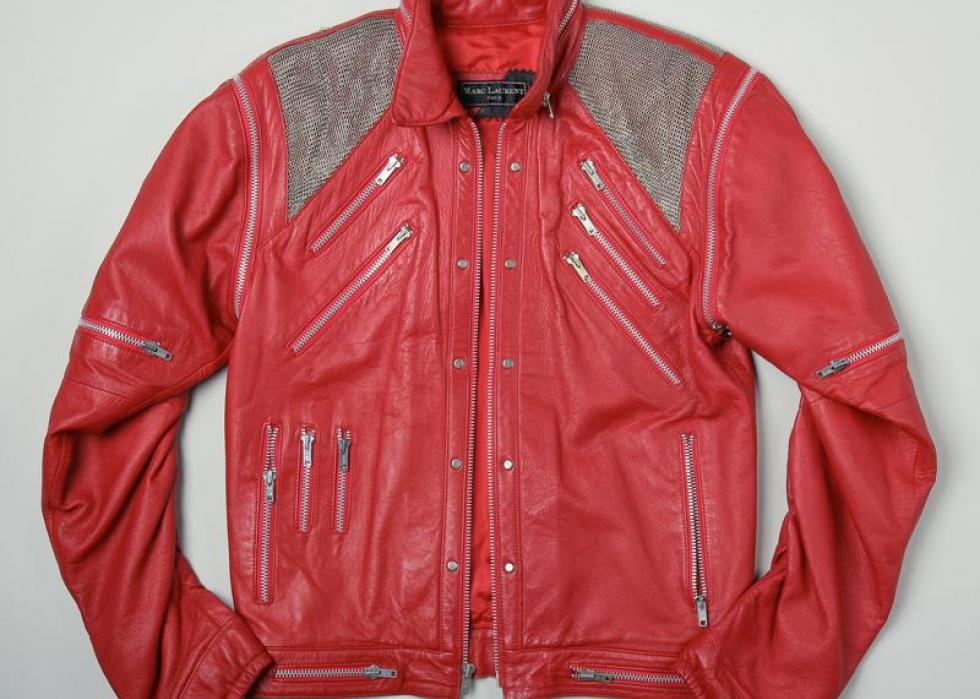
1983: Thriller jacket
On Dec. ii, 1983, 13 minutes changed the globe. That was the duration of Michael Jackson'southward "Thriller" video, the MTV masterpiece that both launched the music video era and at the same time represented its zenith. The iconic red jacket with V-shaped red stripes that the King of Pop wore in the video was an instant miracle. When the original sold for $ane.viii one thousand thousand in 2011, the buyer reportedly called it "the greatest slice of rock and coil memorabilia in history."
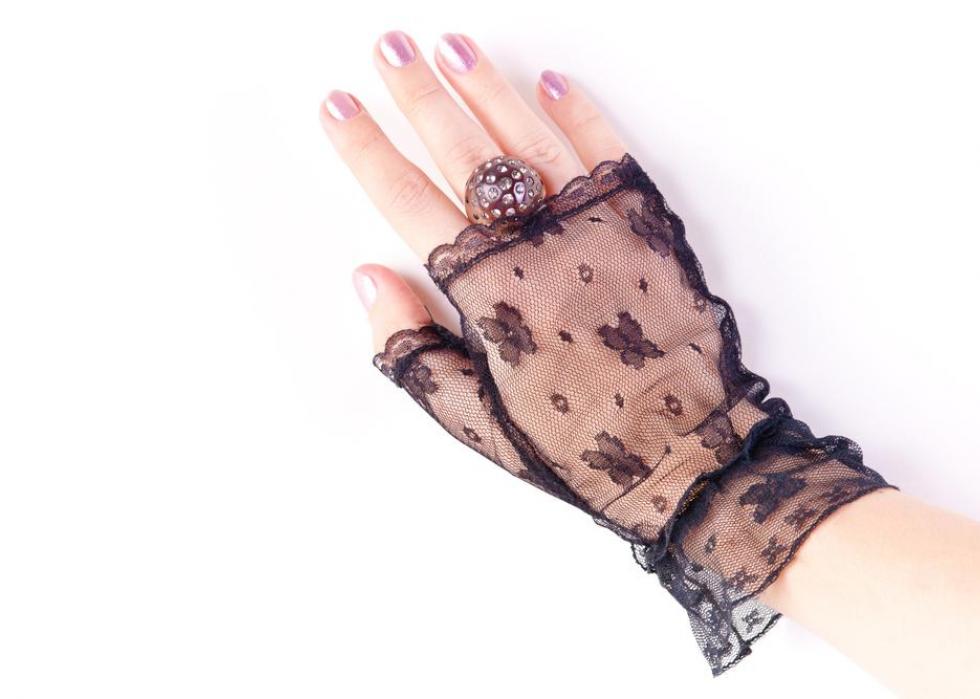
1984: Fingerless gloves
Madonna was not the but trend-setting celebrity whose ensemble included cut-off gloves, but she was one of the about visible. On the border of punk and popular, fingerless gloves soon found their way from the easily of Madonna to legions of her fans who copied her conformity-shattering style.
Ting Him Mak // Wikimedia Commons
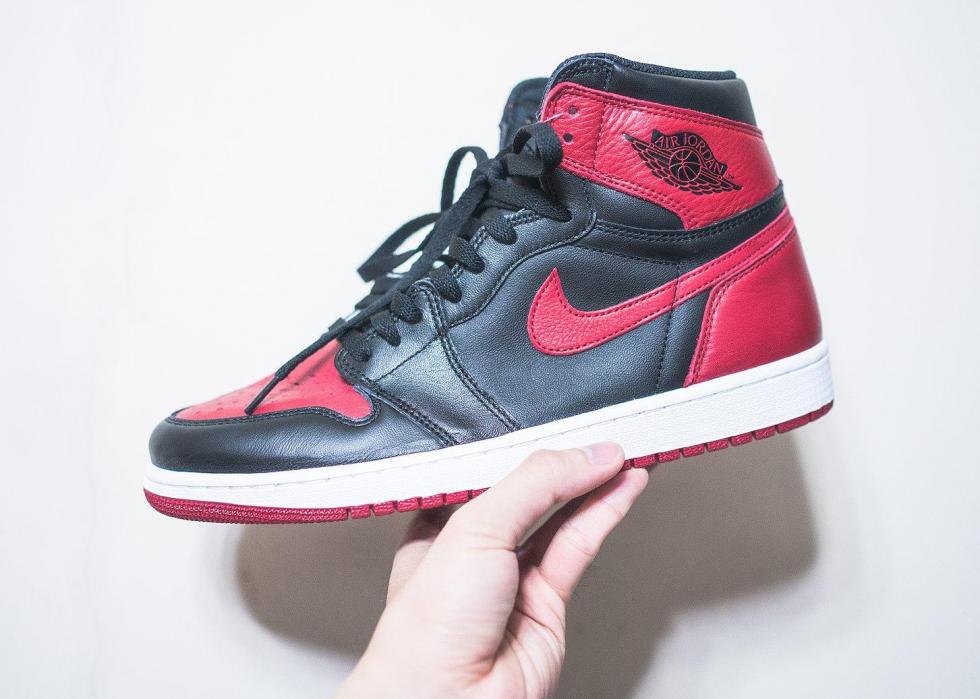
1985: Air Jordans
While Michael Jackson was decorated owning the popular civilisation infinite of music, another Michael was setting ruby-red-and-black leather trends of his own. In 1985, the original Air Jordan sneaker was released—and the era of loftier-end luxury able-bodied sneakers had begun. That twelvemonth, Hashemite kingdom of jordan made the jump from basketball game dandy to global entrepreneur and manner mogul, and fans all over the earth rushed to the local shoe store to come across if they could afford a pair of his sneakers for themselves.
Nancy Bauer // shutterstock
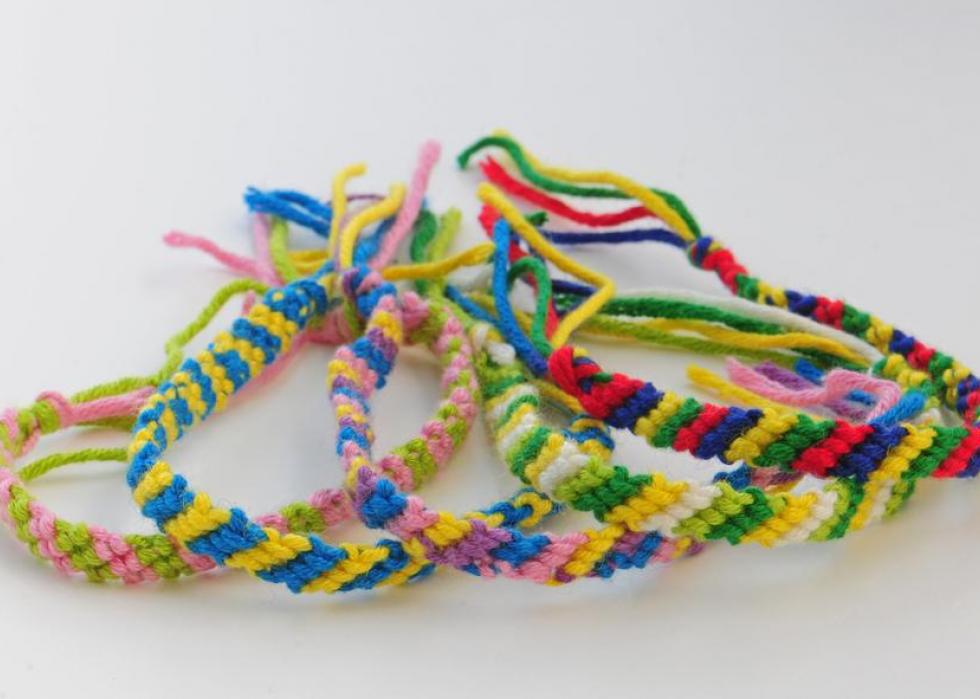
1986: Friendship bracelets
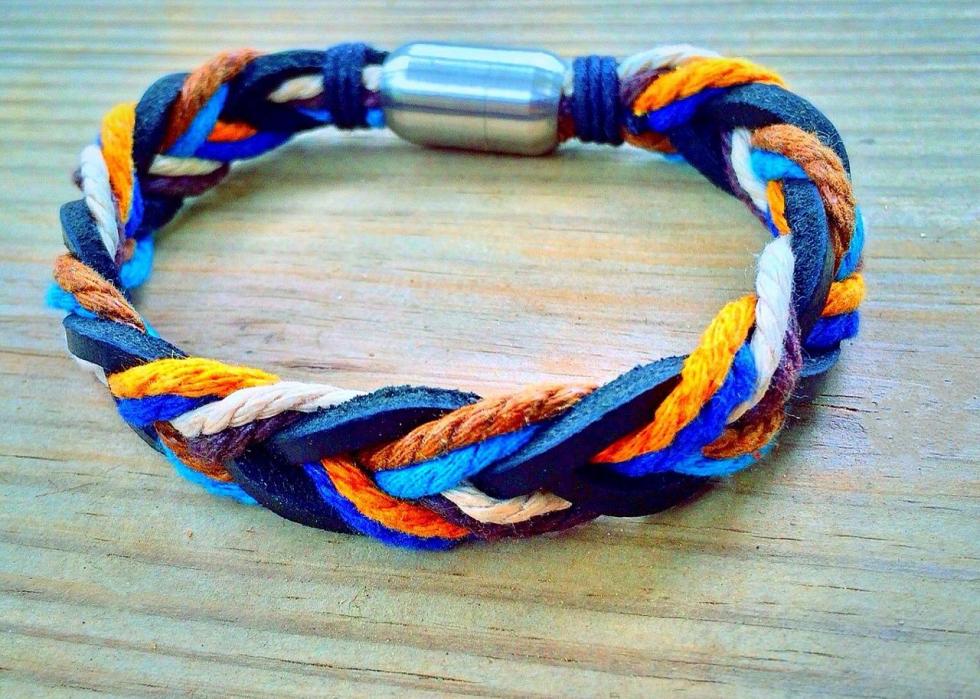
From bell-bottoms to peasant blouses, the trends that defined the hippie era of the 1960s have resurfaced from time to fourth dimension. The mid-to-late 80s were one of those times, as countless brightly colored, handmade bracelets crafted from thread or yarn were woven, exchanged, and worn as symbols of friendship, oftentimes until shut to the point of decay.
Keith Richardson // YouTube
1987: Z Cavaricci pants
Z. Cavaricci launched in 1982, but when the brand's blockbuster Cateye pants striking stores in 1987, customers flocked to those stores to snag a pair for themselves. Like Air Jordans before them, Z. Cavs were pricey, only if you had the cash, that fiddling white tab in on the wing gained you instant admission to the in-oversupply.
o.przybysz // Shutterstock
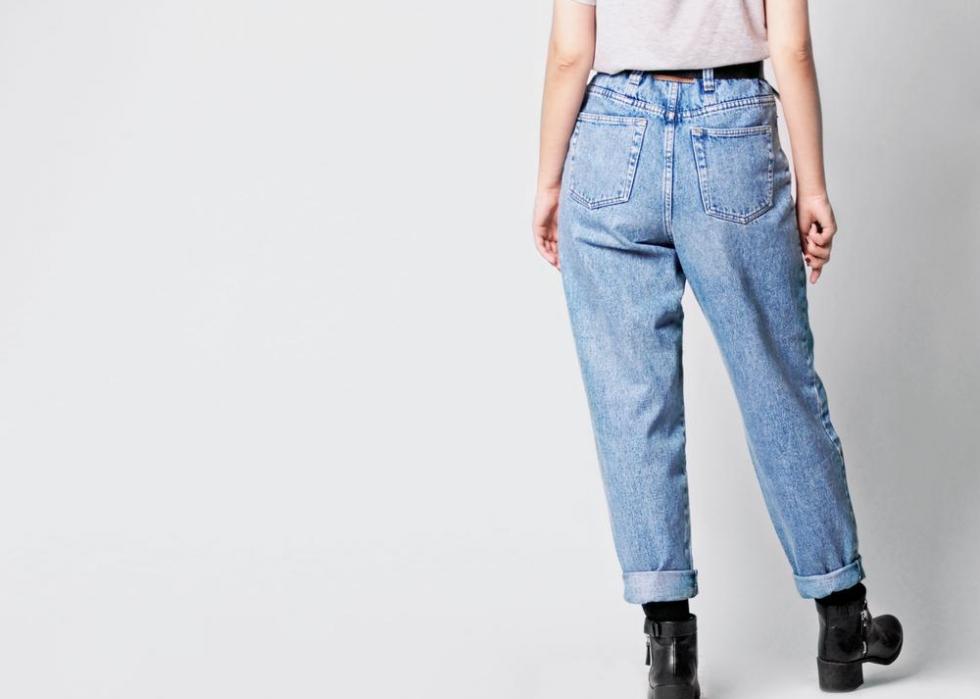
1988: Pinch-rolled jeans
In 1988, it wasn't and so much the make of jeans that mattered, but what was going on at the gage around the talocrural joint. The trend of pinching and rolling pant bottoms into ankle-hugging cuffs took off in the '80s, becoming standard operating procedure past the close of the decade. In 1990, "Beverly Hills 90210" would immortalize the look as a required element of the standard suburban prep uniform.
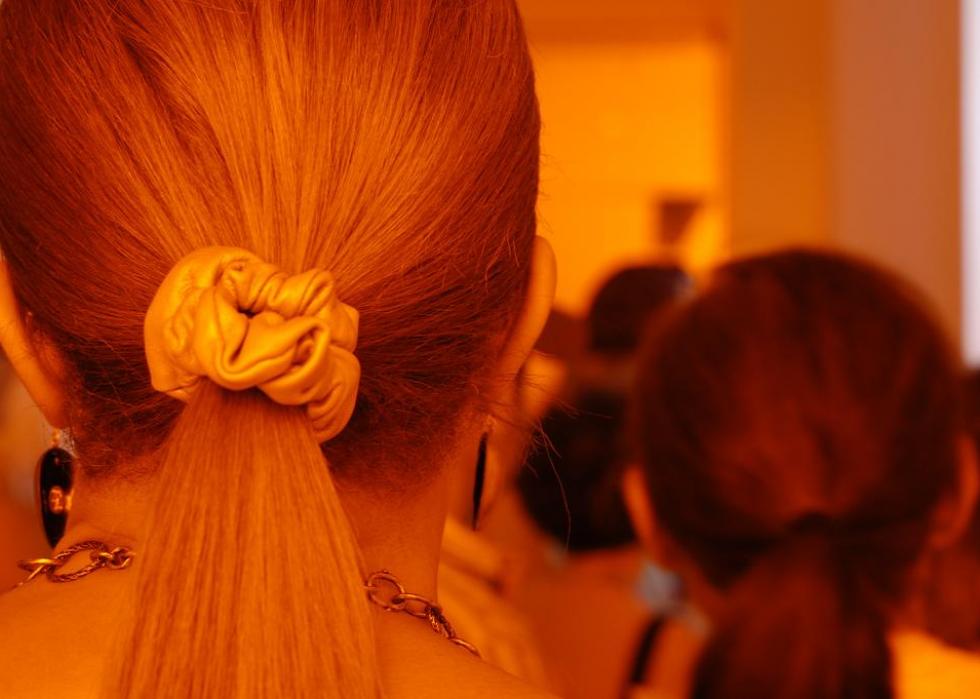
1989: Scrunchies
In 1989, standard hair ties would no longer suffice for pulling back ponytails. Scrunchies, a riff on the brand name Scunci, were the must-take elastic cloth bands that became all the rage in 1989 and endured well into the '90s.
Jaguar PS // Shutterstock
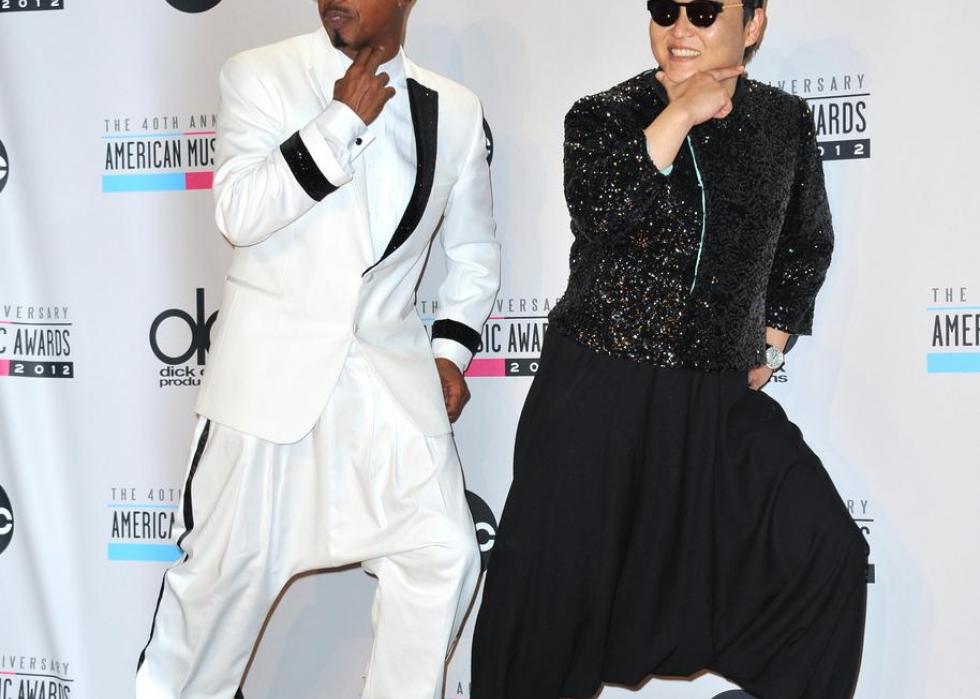
1990: Hammer pants
Before 1990, puffy pants that taper from the depression crotch to the bottom of the leg were associated with mid-19th century feminists. That twelvemonth, however, M.C. Hammer released the boom hit single "U Can't Touch This." From that moment on, what had been chosen "parachute pants" or "harem pants" would be forever known as Hammer pants.
Ewan Munro // Wikimedia Eatables
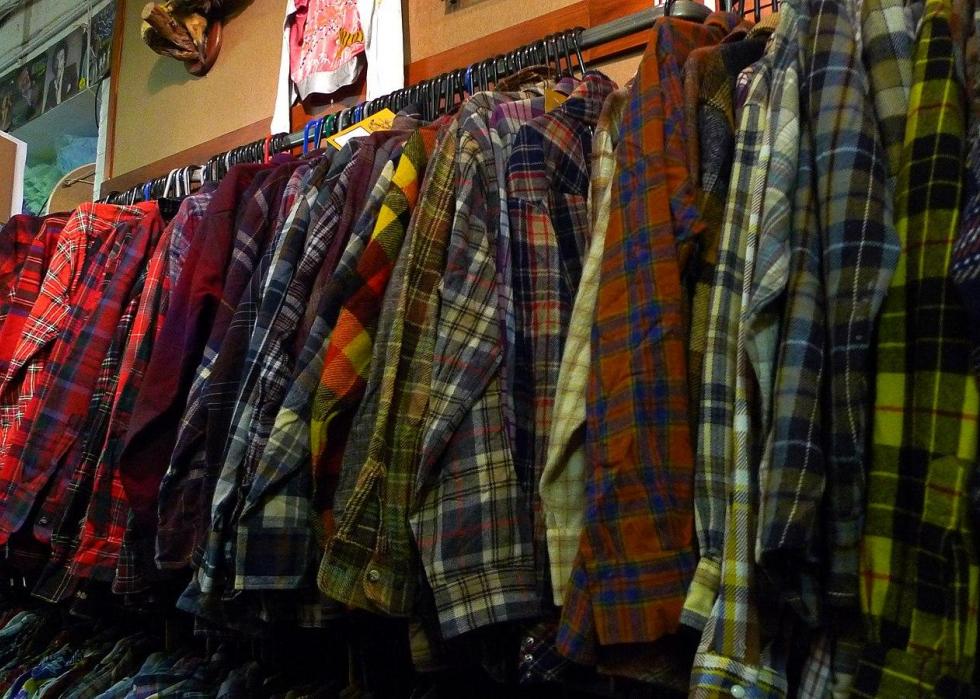
1991: Flannel shirts
By 1991, the bars and coffee shops of Seattle could no longer comprise the grunge music motility that was built-in in the city. That year served as a seismic shift in American music as three seminal albums were released inside the span of a single calendar month: "Ten" by Pearl Jam, "Badmotorfinger" by Soundgarden and "Nevermind" past Nirvana. Grunge had gone national and so, as well, had its Pacific Northwest stylings, which were defined by the centerpiece of the grunge uniform: the flannel shirt.
James Doss // Shutterstock
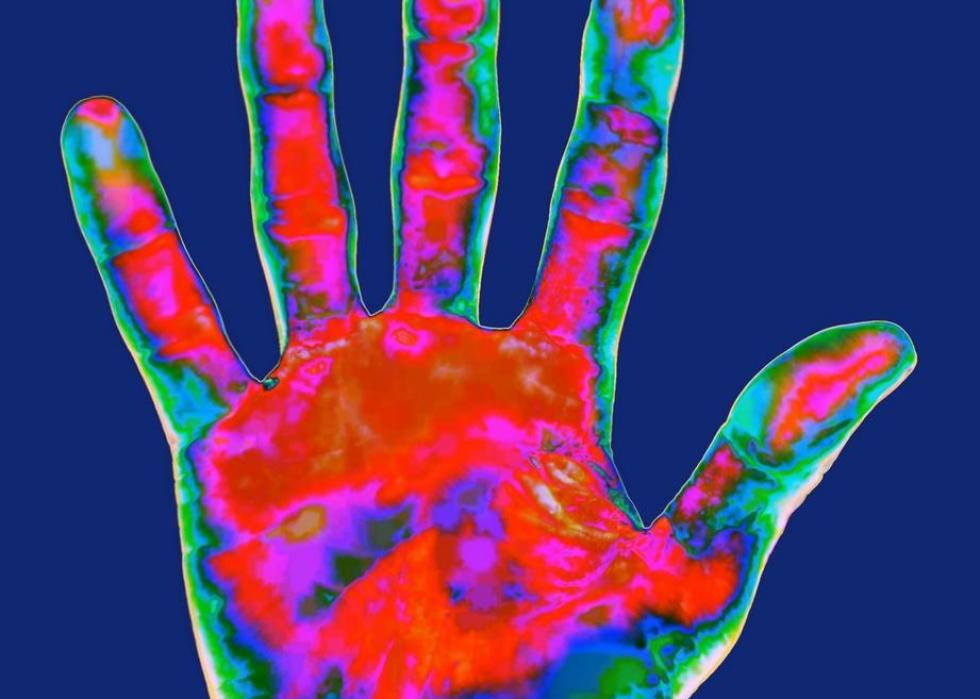
1992: Hypercolor
Put your hand on a purple shirt and almost instantly a perfect bright pink handprint is left behind. That was the magic of Hypercolor, a heat-sensitive clothing fad that won over much of America'southward youth in the early 1990s.
Evgeniya Porechenskaya // Flickr
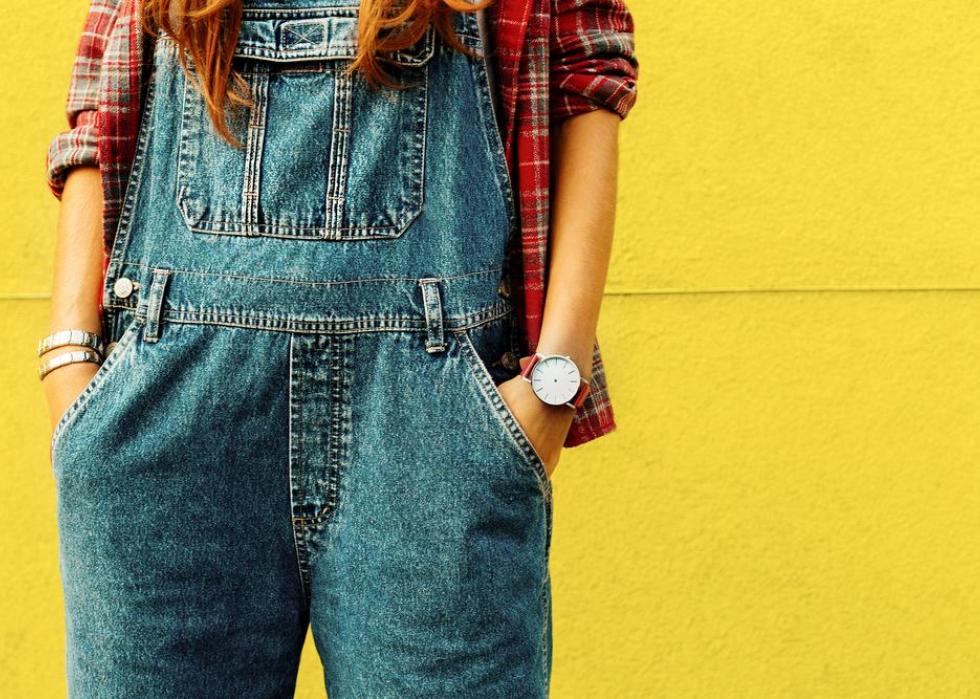
1993: Overalls
Overalls are currently experiencing a moment of resurgence, but nothing like the farmer-chic craze that swept American middle and high schools in the early on 1990s. If you wore them, hopefully you had the skilful sense to go out ane strap unbottoned like Will Smith.
DMITRII SIMAKOV // Shutterstock
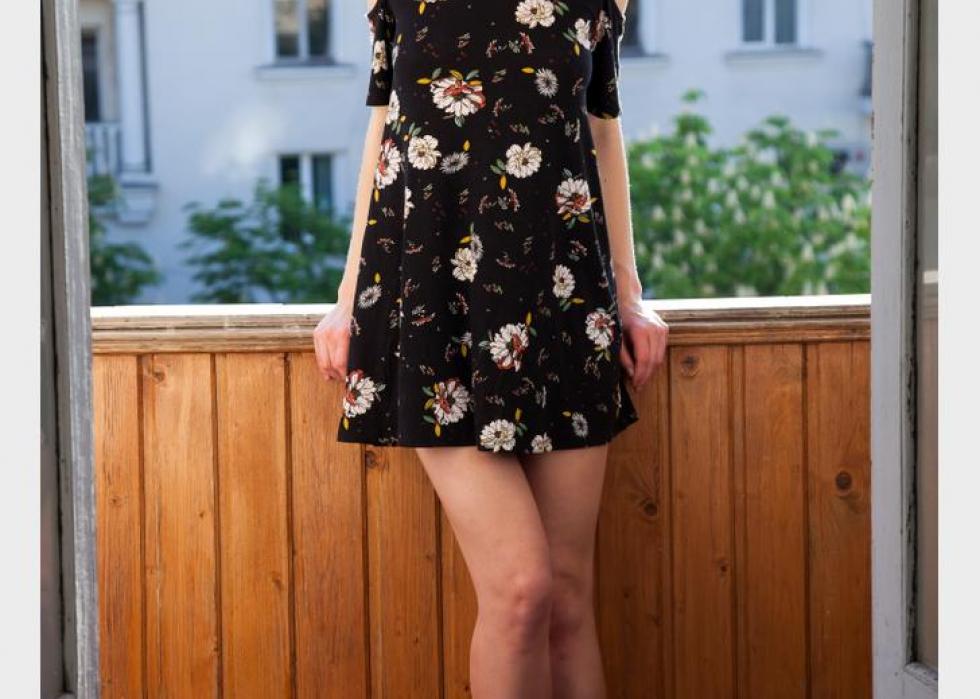
1994: Babydoll dresses
Past the mid-1990s, girls and women beyond the country had rallied around babydoll dresses, which were adequately pocket-sized, but too exuded sex appeal. In 1994, the popular awareness supergroup Spice Girls formed, and Emma "Babe Spice" Bunton lived upward to her phase proper name past donning babydoll dresses.
Imahinasyon Photography // Flickr
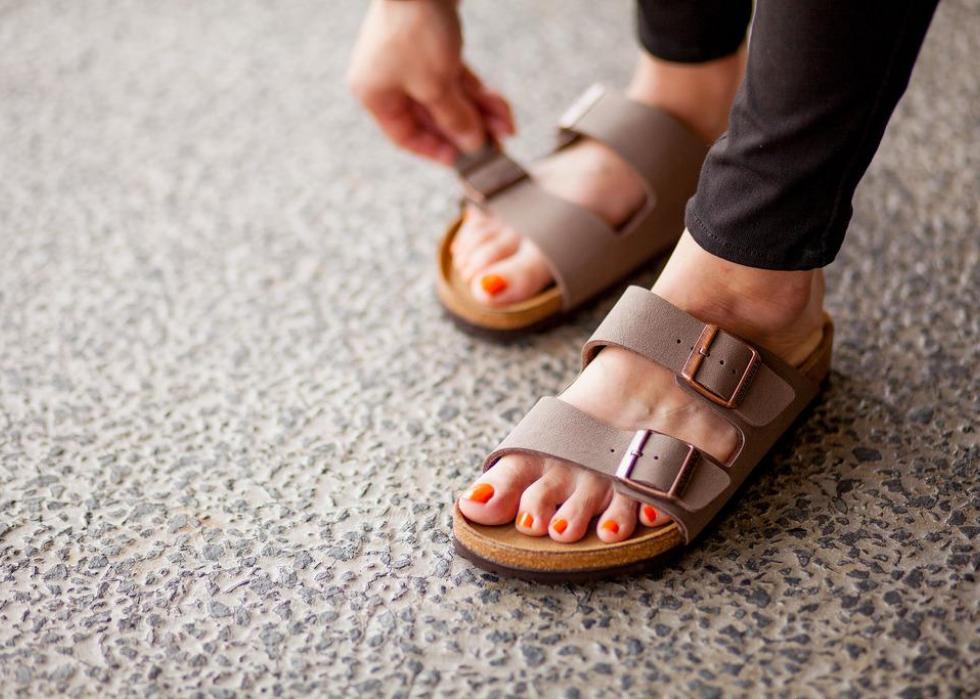
1995: Birkenstock sandals
Birkenstocks date all the manner back to a German shoemaker in the late 1700s, but the modern Birkenstock sandal was born in 1964. The familiar Arizona style debuted in 1973 and from concerts to campus, boardwalks to bistros, they seemed to be on everybody's anxiety by the mid-'90s. In 1996, the visitor would offering more than 300 style and color combinations.
Nesolenaya Alexandra // Shutterstock
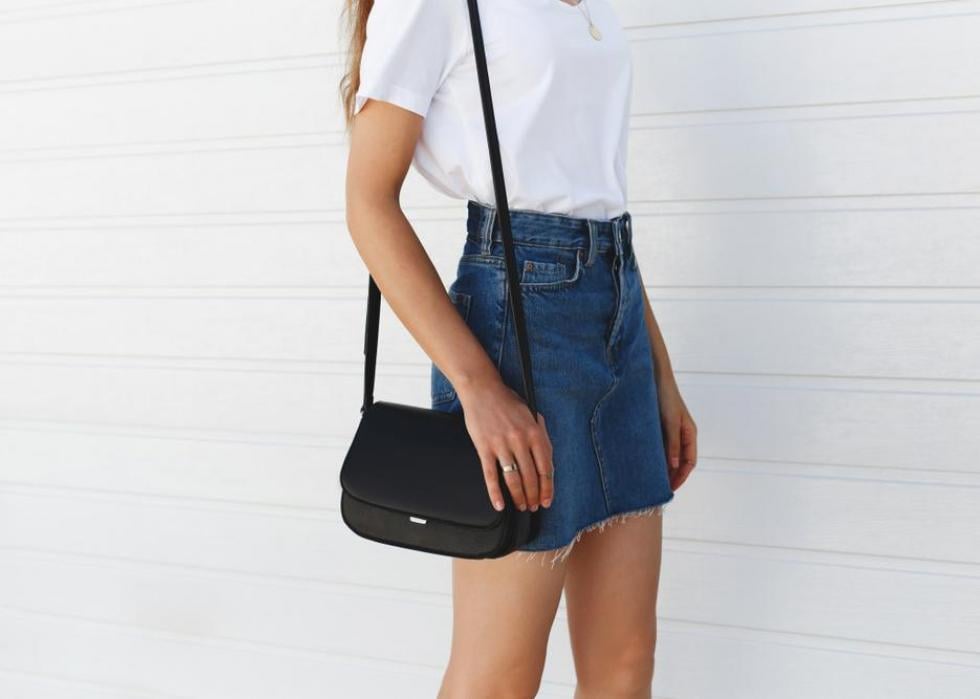
1996: Denim skirts
From split-fronts to bluish pockets, push button-fronts to cherry-red bombs, denim skirts in the mid-1990s seemed to be more popular than full-length jeans for everyone from middle-school girls to onscreen celebrities. The year 1996, however, proved to exist a watershed moment for the denim skirt when ultimate '90s sex symbol and "Baywatch" infant Pamela Anderson rocked i with a skin-tight, girl-ability crop superlative.
1997: Haversack purses
It tin't be definitively stated that Alicia Silverstone's character in 1995's "Clueless" started the tiny backpack craze, but by 1997, they were everywhere. Largely unflattering and horribly impractical, backpack purses, every bit they were often chosen, were a central accessory of the era.
Raysonho @ Open Grid Scheduler // Wikimedia Commons
1998: Hilfiger everything
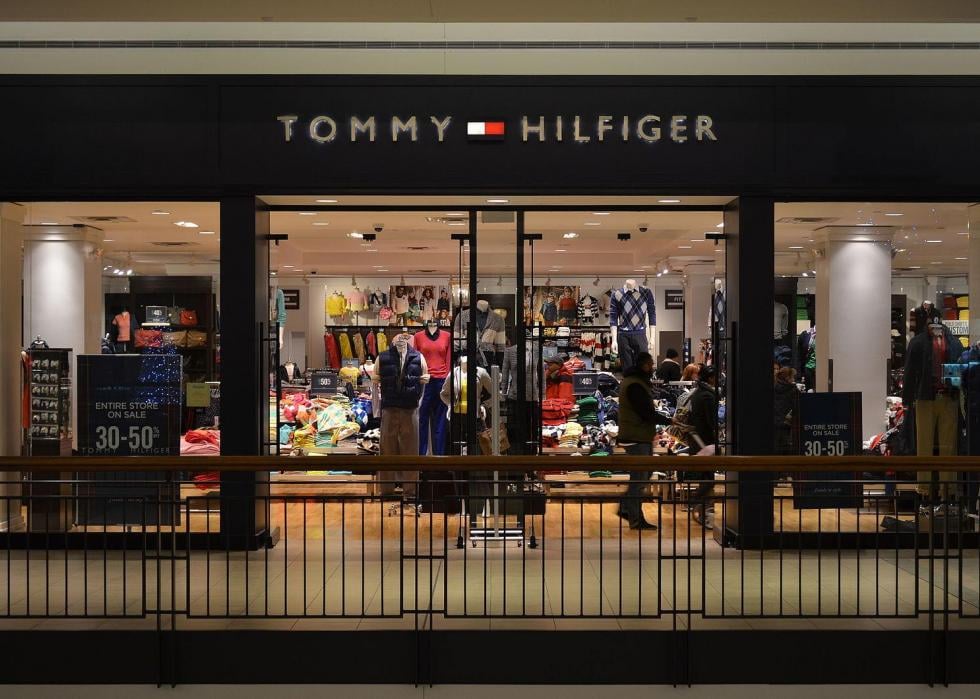
By the mid-1990s, Tommy Hilfiger had set his massively successful brand apart every bit a downstreet culling to the chic stylings of competitors like Calvin Klein and Ralph Lauren. Although the brand went through several incarnations, the Hilfiger heydey was virtually certainly the 1990s, when the clothing was office of the uniform for both inner-metropolis hip-hop artists and the legions of pretenders in the suburbs who hung on their every move. The twelvemonth 1998 was a watershed for Hilfiger thanks to supergroup Destiny'south Kid, who flaunted the reddish, white, and blue as their make of pick—Britney Spears, Gwen Stefani, TLC, and other headline acts got in on the craze besides.
melissamn / Shutterstock.com
2000: Trucker hats
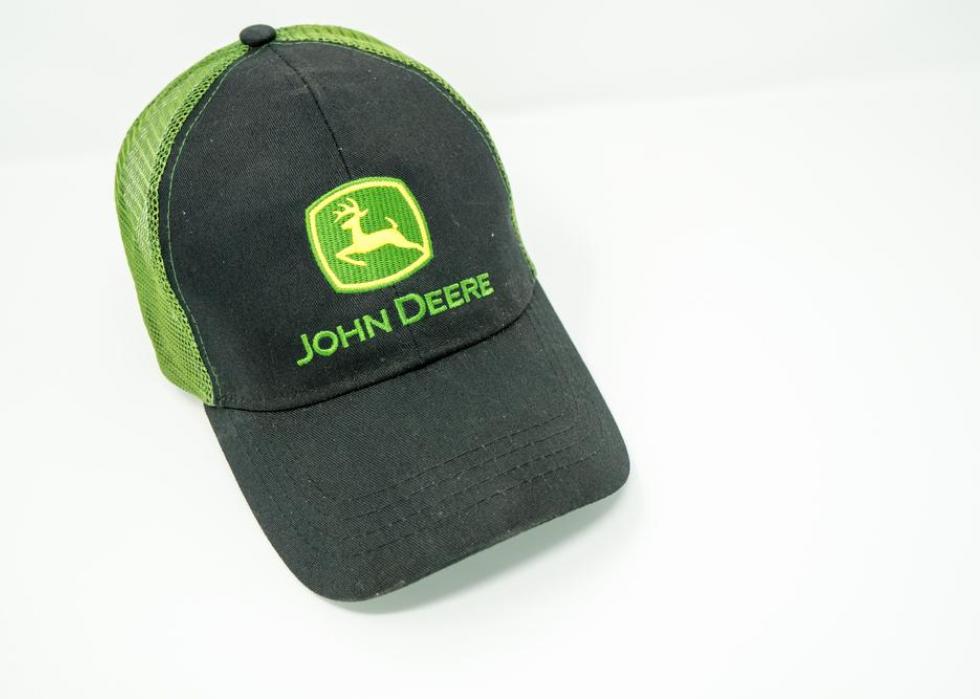
In 2000, the testify "Jackass" debuted and "That '70s Show" was at the height of its popularity—and both Johnny Knoxville of the former and Ashton Kutcher of the latter were truthful believers in the trucker hat fad. Made from plastic mesh, foam, and picayune else, trucker hats were originally functional accessories born out necessity. Merely like flannel shirts, Dr. Marten boots, then many trends that came before, blueish-collar Americans who had worn them forever were largely dumbfounded when trucker hats were co-opted by celebrities and hip trendsetters.
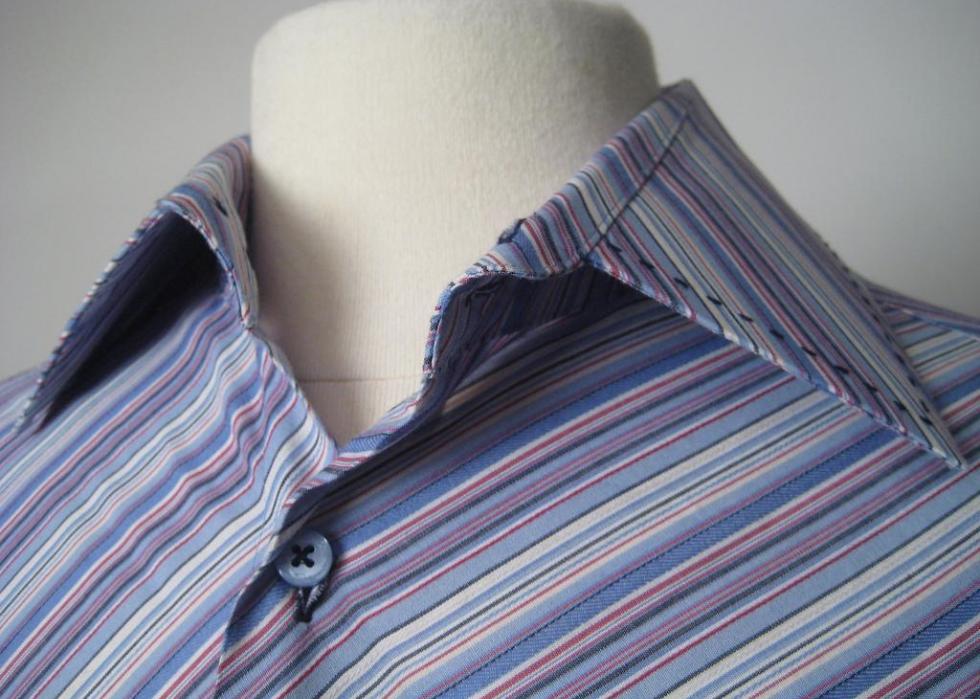
2001: Popped collars
Although Kanye West occasionally rocks a popped collar today, the controversial rapper by no means blazed a fashion trail with that particular wait. Collars intentionally raised on Polo shirts and button-downs was a trend amidst well-heeled country social club yuppies—and the legions of pretenders—in the 1980s. Just the trend got some other boost in 2001 from Usher's "Popular Ya Collar."
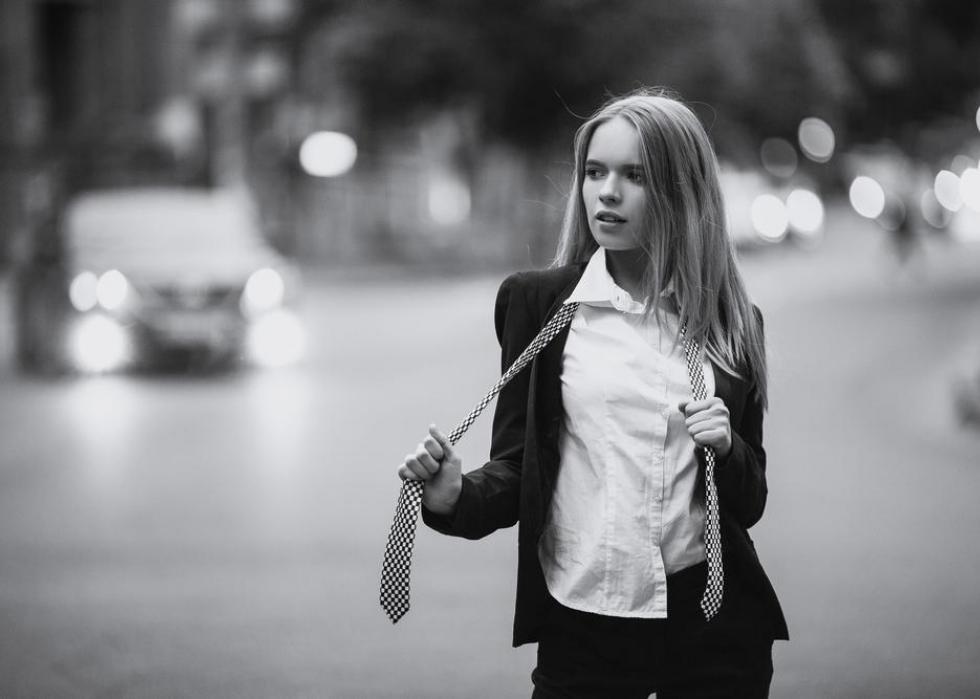
2002: Neckties for no reason
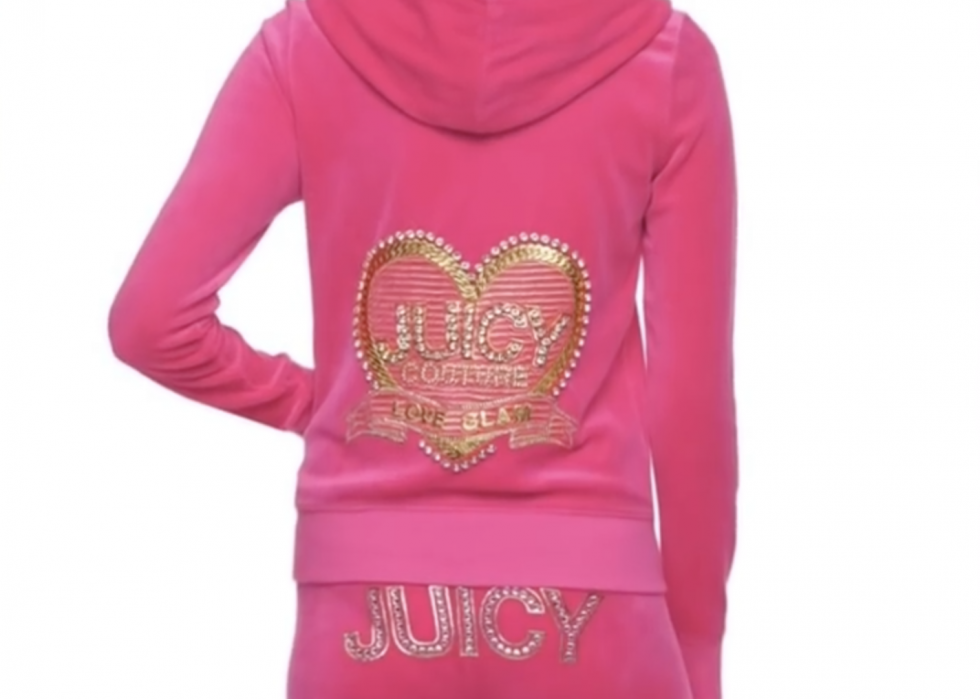
2003: Juicy track pants
Juicy Couture brought the 1980s-1990s tracksuit motility back into vogue, simply with a twist. If you felt like you couldn't leave the house in the early 2000s without seeing innuendo-laced writing on the butts of girls and women everywhere, you were not lone. The word "Juicy" sparked a cultural movement, making the seat of your pants the get-to spot to slap a logo.
Norman Pogson // Shutterstock
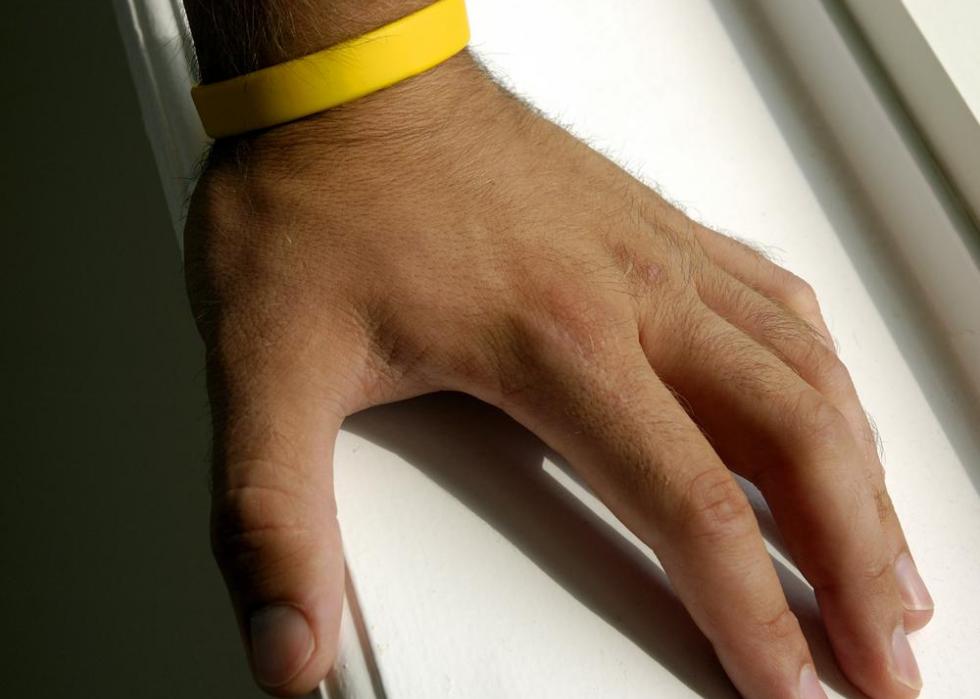
2004: Livestrong bands
Before he was outed equally a cheater, cancer survivor Lance Armstrong was the king of the cycling universe and the heed backside a well-intentioned fundraising prop that turned into a global fashion phenomenon. Yellowish rubbery Livestrong bracelets were originally sold to heighten money for cancer, merely soon became a must-have fashion statement that spawned a laundry listing of associated bracelets with their own colors and causes.
TexasDex // Wikimedia Commons
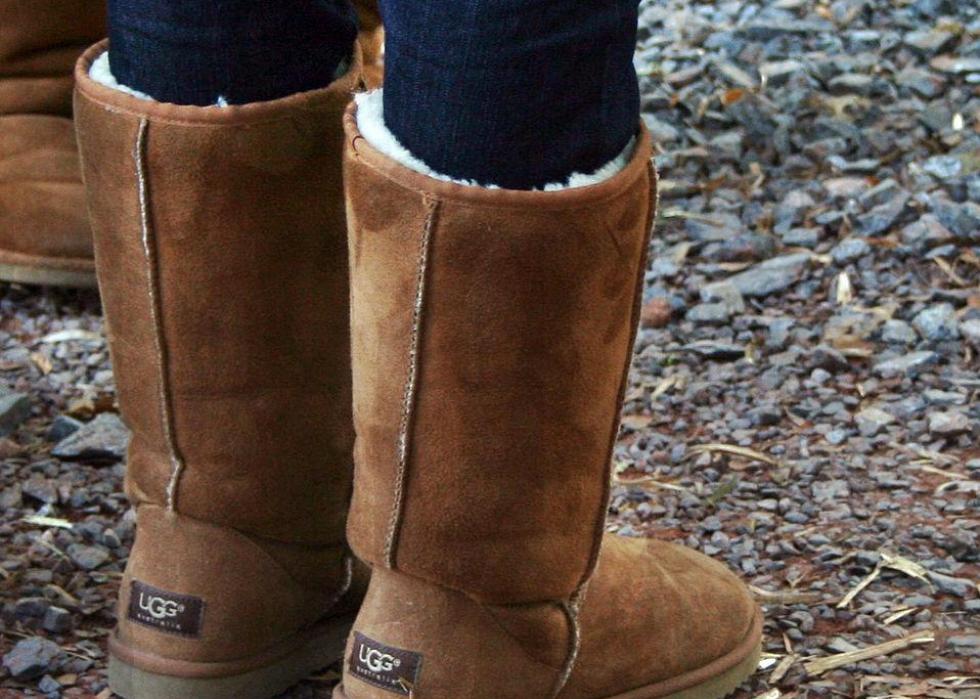
2005: Ugg boots
Although Uggs were born in 1978 and continue to endure to the present day, the pinnacle of the sheepskin-lined boots' reign was in the mid-aughts. After Oprah named them as one of her favorite things in 2000, the boots spiked in popularity. By 2005, anybody from Beyonce to Ben Affleck was wearing them—sometimes on the job.
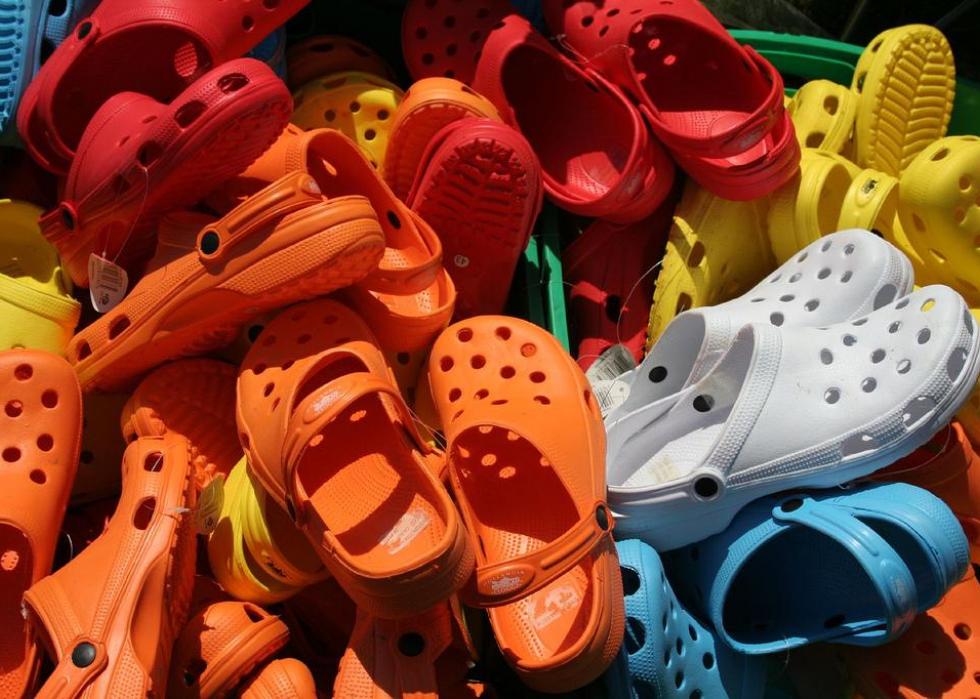
2006: Crocs
These foam, Swiss cheese-holed clogs kickoff appeared in 2002. But iv years later, the company went from niche to juggernaut as Crocs made their stock market debut.
De Repente // Shutterstock
2007: Fedoras again
A century afterward the cease of the hat's heydey in the mid-1950s, the fedora returned with a vengeance. This time around, it was no longer the capstone on an elegant formal await that dominated men'southward clothing culture in the early 20th century, nor was it the trademark accompaniment of gangsters, Rat Packers, and sportswriters. By 2007, the fedora had been co-opted by hip urbanites, popularized by idols like Brad Pitt, and no longer required formal vesture to friction match.
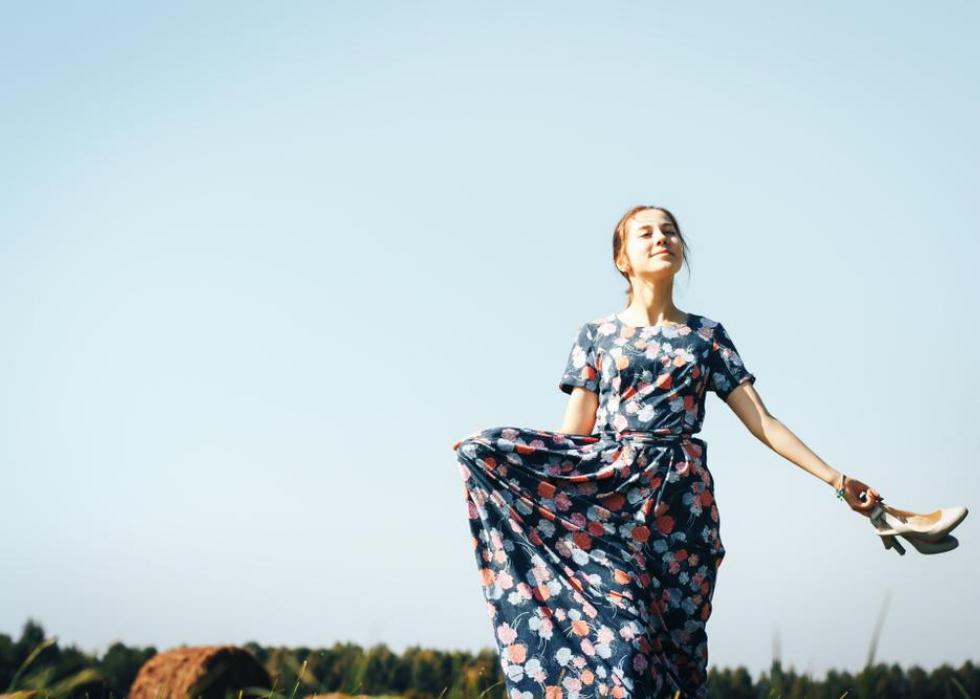
2008: Maxi dresses
Women embraced long, flowing maxi dresses during the bound and summer of 2008, thanks in part to the and so-chosen "queen of the maxi dress," Angelina Jolie. Other celebs like Kate Moss joined the craze, leading fashion magazines to proclaim the return of the maxi.
menswear-market.com // Flickr
2010: Skinny jeans
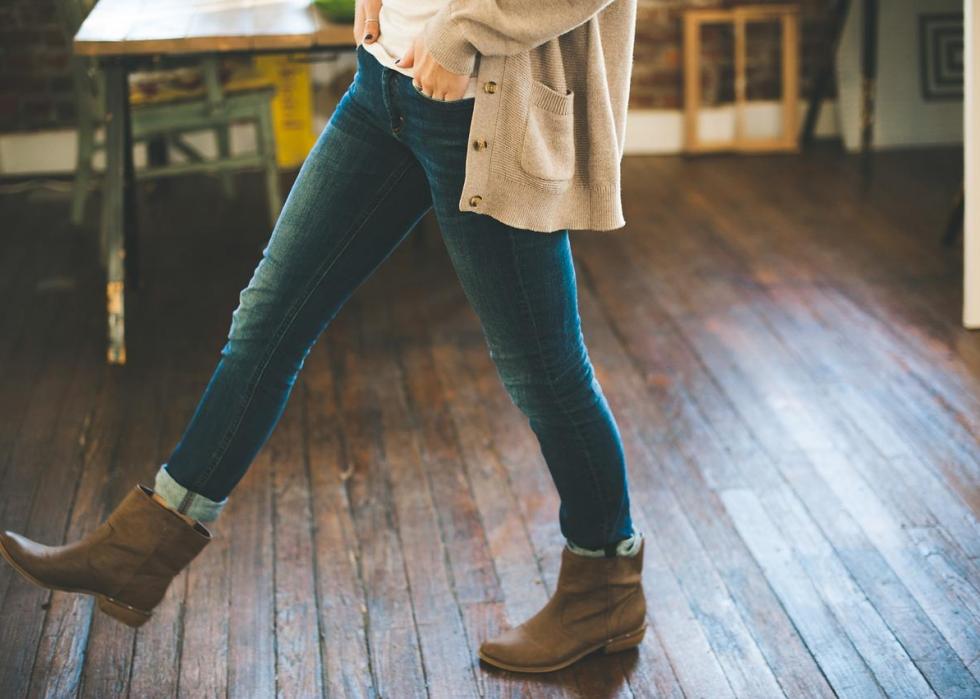
Sid Barbarous and the Ramones wore skinny jeans in the 1970s, while acts similar The Strokes carried their style into the early aughts. In 2010, however, NPR proclaimed skinny jeans the new "rock fashion." The pants as well became associated with hipsters, normally in derisive fashion. But the trend got and so out of hand that eventually, even babies were sporting skinny jeans.
2011: Jeggings
History is unkind to many fashion trends, few more than ruthlessly than the much-maligned jeans/leggings combo known every bit jeggings, which stretched over legs of all shapes and sizes throughout 2011. The Daily Beast called them "denim-colored sausage casings" and "the 21st century's worst fashion tendency," but information technology was the motion'due south adherents who got the last express mirth. In 2011, the Concise Oxford English language Dictionary added "jeggings" to the official American vocabulary.
2012: Hoodies
The beginning hooded sweatshirt was produced in 1919 and served for decades as a utility shirt for outdoor workers, but the hoodie became the uniform of a move with the 2012 killing of Florida teenager Trayvon Martin. To supporters of gun-toting, stand-your-ground-law defendant George Zimmerman, who was somewhen acquitted of Martin'due south murder, the hoodie was a sign of trouble. To the Blackness Lives Affair move and its supporters, hoodies represented a stand confronting prejudice, racism, and inequality under the constabulary.
2013: Wedge sneakers
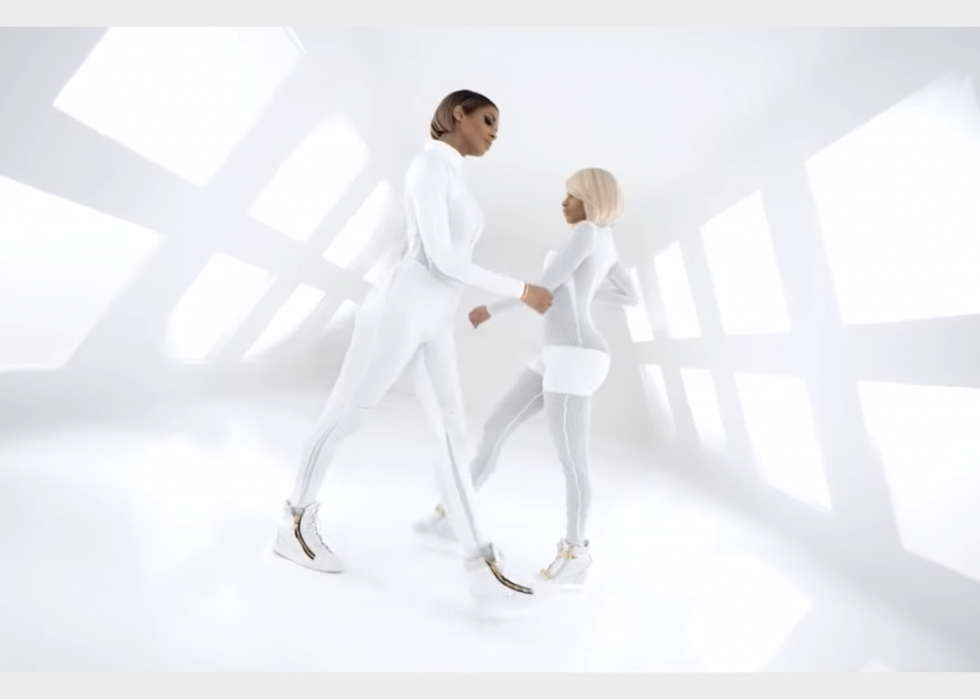
In 2012, Isabel Marant'southward Willow Sneaker lit the spark that would turn into the wedge sneaker inferno, which engulfed America and much of the western world the following twelvemonth. They were a bona fide craze past 2013, every bit Nicki Minaj and Ciara sported them in the music video for "I'm Out" and Alicia Keys launched a wedge sneaker collection with Reebok.
2014: Loom bands
The latest in a long and storied lineage of bracelets that aren't quite jewelry, loom bands dominated youth accessory culture above nearly all else in 2014. Function of the reason the brightly colored interwoven arm-clothing was so successful is that loom bands seemed to be loved equally by both boys and girls.
2015: Athleisure
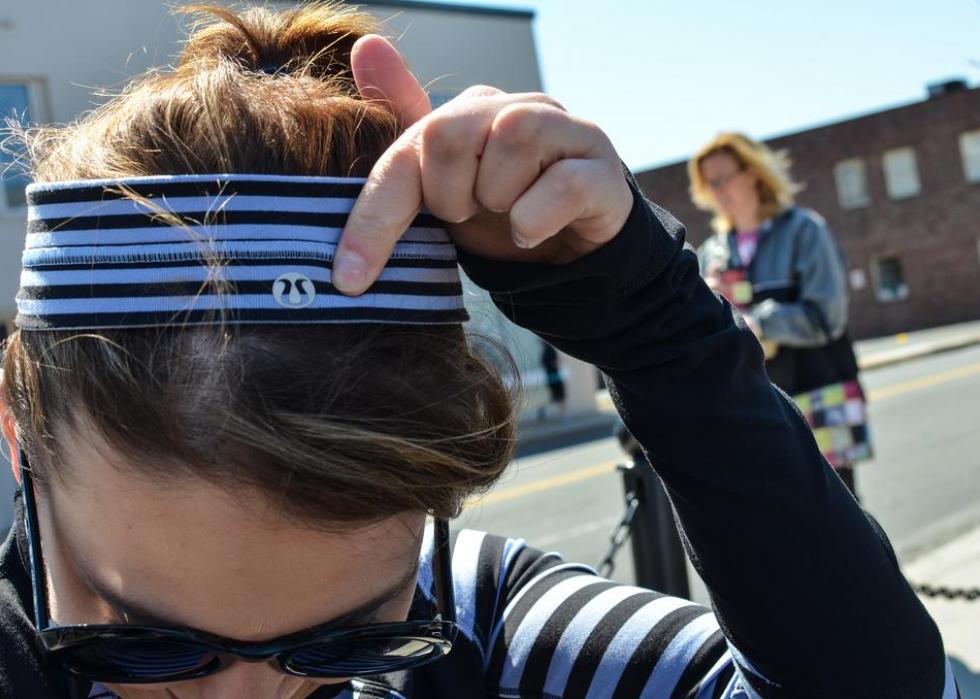
Past 2015, yoga pants were no longer just for yoga—or even mostly for yoga, in a lot of cases. Information technology was the year of athleisure, when Under Armour and Nike surpassed the likes of Gap and Abercrombie & Fitch for millennial clothing purchases. That twelvemonth, the #FitSpo hashtag dominated Instagram and stretch pants and sports bras became going-out clothes.
ragdolldesignz // Pixabay
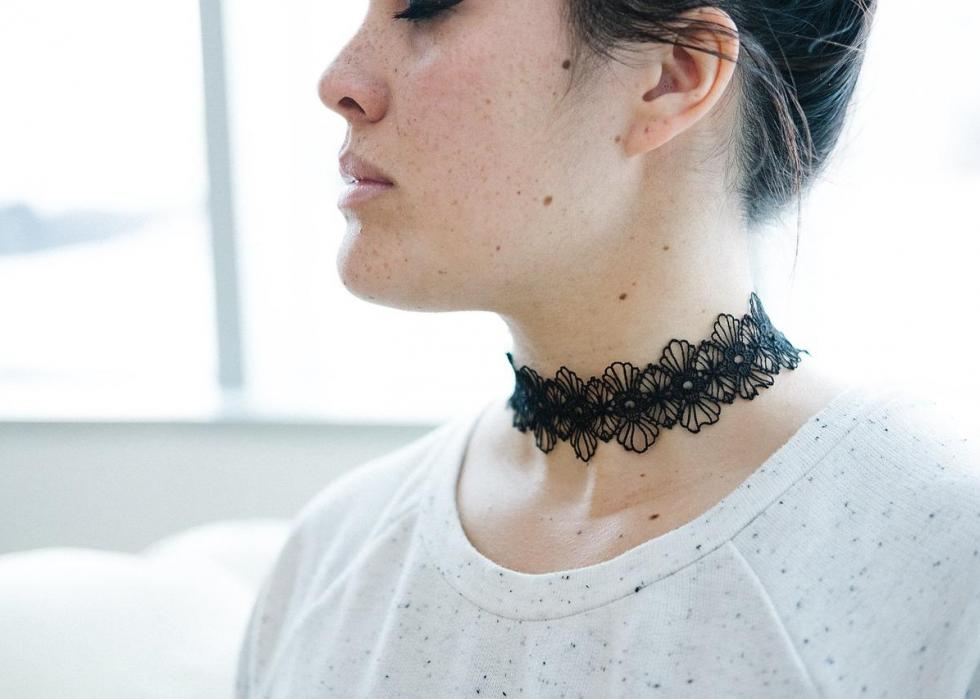
2016: Chokers
Chokers take been hugging women'southward necks since at least the time of Anne Boleyn, who died in 1536—and they've endured through the ages. The year 2016, notwithstanding, might just take been the pinnacle of the fashion statement. Jewel-encrusted, evidently, velvet, lace, or adorned with a nameplate, you didn't take to look far to find a choker in 2016.
Edward Kimmel // Wikimedia Eatables
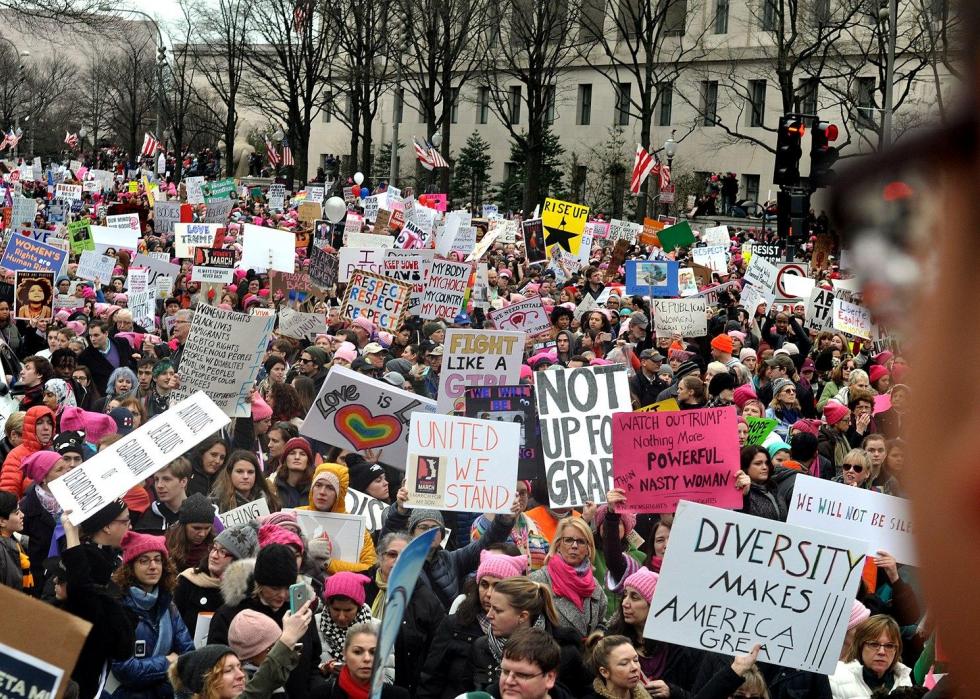
2017: Girl-ability shirts
In response to the election of Donald Trump and the #MeToo motility, masses of women began wearing feminist protest shirts every bit both a political statement and a mode statement. By 2017, girl-power shirts were a mainstay, with companies making fortunes designing shirts with slogans similar "Dame," "Fight similar a girl," and "Sushi rolls not gender roles."
Trending At present
© Stacker 2022. All rights reserved.









0 Response to "14 Year Old Fashion Trends 2017"
Post a Comment